
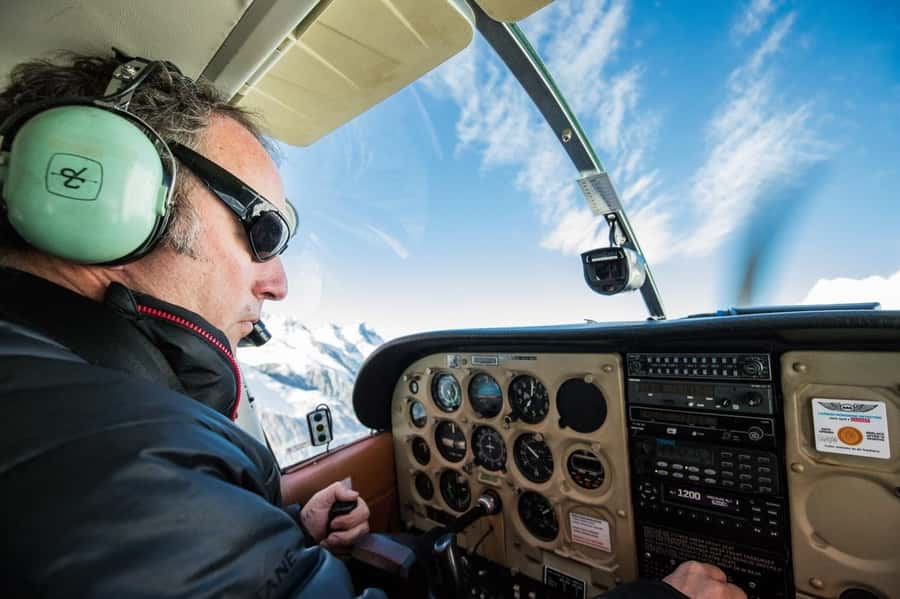
Review · MOUNT COOK HELICOPTER TOURS
Mt Cook: 55-Minute Scenic Flight in Helicopter or Ski Plane
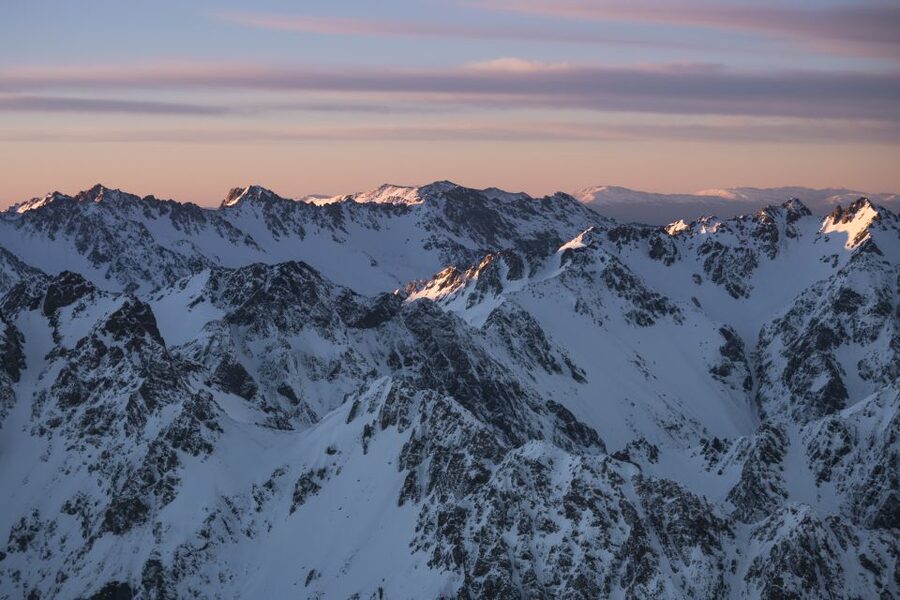
A 55-minute flight around Aoraki Mount Cook gives you a view of New Zealand’s highest peaks that is hard to match from the ground. You cross the Main Divide, look down on Fox and Franz Josef Glaciers, then return over the Tasman Glacier and the east face of Mount Cook. The route packs a lot into less than an hour.
I like the choice between a helicopter and ski plane, and I like the small group limit of six. You get a proper window seat in a small aircraft rather than being one face in a crowd. The main caution is weather and seating: cloud can cancel the flight, and one seat directly behind the rotor area had poor visibility.
Key points
- Two aircraft choices: Fly by helicopter or ski plane, depending on availability and conditions.
- A full Southern Alps circuit: Cross the Main Divide, follow the Tasman Sea, and return via the Tasman Glacier.
- Three major peaks: Look for Aoraki Mount Cook, Mount Tasman, and Mount Sefton from above.
- Glacier views from the air: Fox, Franz Josef, and Tasman Glaciers are central to the route.
- Only six participants: The small group keeps the experience personal and helps limit crowding.
- Weather controls the day: Poor conditions can lead to a cancellation, rescheduling, or a change from plane to helicopter.
A 55-minute flight with a big route
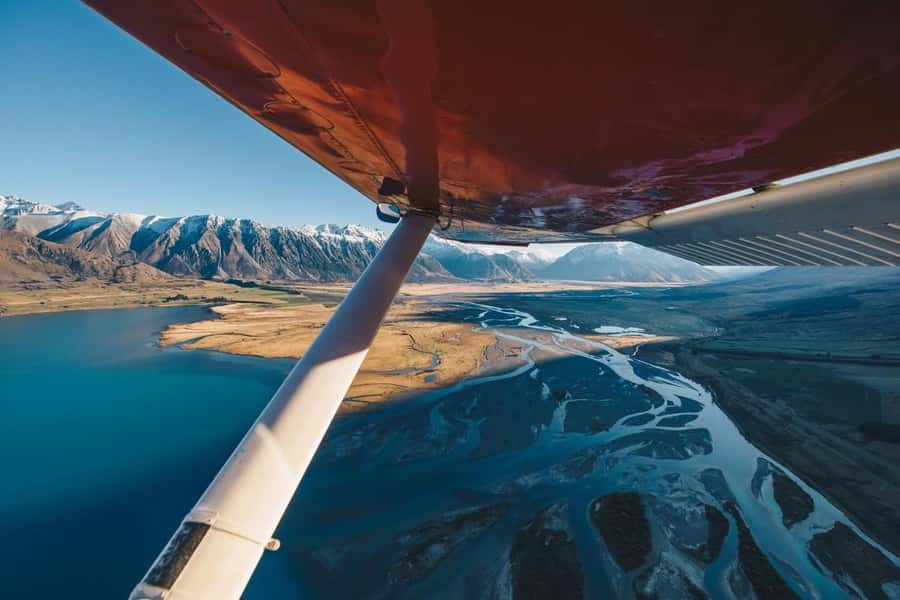
At $447 per person, this is not a casual add-on. It costs more than most short sightseeing activities, but you are paying for an aerial route across a large section of the Southern Alps, not just a quick look at one mountain.
The flight begins with views almost immediately after takeoff. That matters here because the main reward is not a single final viewpoint. You are watching the terrain change as the aircraft moves from the eastern side of the Alps toward the West Coast, then back again.
You will have an English-speaking guide providing commentary during the flight. The guide helps you identify the peaks, glaciers, icefalls, and major sections of the route. In a small aircraft, that commentary should be easier to follow than on a large sightseeing flight.
The advertised group size is limited to six participants. That makes this a better fit for you if you want a quieter experience and a clearer chance to look out of the aircraft. It also means passenger weights matter more. If the combined weight reaches the aircraft’s safety limit, your flight may be rescheduled.
More Scenic Helicopter Flights in New Zealand
- Mount Cook: Scenic Helicopter Flight with Alpine Landing
★ 4.8 · 442 reviews - Mount Cook: 50-Minute Aoraki Scenic Helicopter Flight
★ 4.7 · 10 reviews - Mount Cook Scenic 35 Minute Helicopter Flight
★ 5.0 · 6 reviews
Crossing the Main Divide to the West Coast
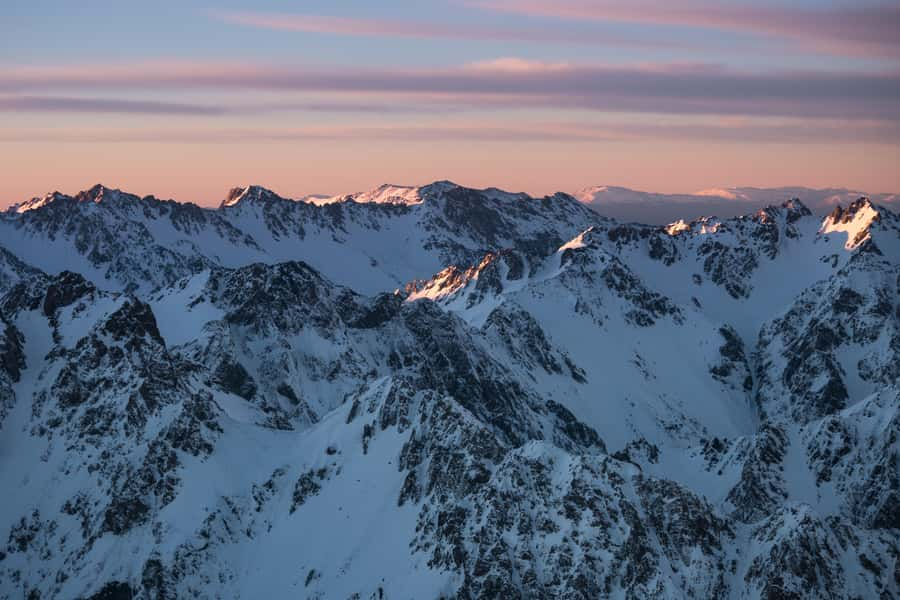
The first major part of the route crosses the Main Divide of the Southern Alps. This is the high mountain spine separating the eastern and western sides of New Zealand’s South Island.
From the air, the crossing gives you a useful sense of scale. You are not simply looking at a peak from one valley. You are moving across the mountain system itself, with snow-covered ridges and ice fields extending in different directions.
The route then reaches the West Coast side of the Alps. Here, the focus shifts to Fox Glacier and Franz Josef Glacier. These are two of New Zealand’s best-known glaciers, and an aircraft gives you a rare chance to see their upper sections, where the ice begins high among the mountains.
The aerial view is valuable because a ground visit usually shows only a lower section or a valley approach. From above, you can follow the shape of the ice as it runs between peaks. You also avoid spending hours walking simply to gain a partial view, which is one reason the price can make sense for a short trip to the region.
Following the Tasman Sea before turning inland
After reaching the West Coast, the flight tracks north along the Tasman Sea. This part gives the trip a change of pace. The white and gray mountain world opens toward the coast, and you see how quickly the Southern Alps rise from the western side of the island.
The exact amount of detail you see depends heavily on cloud and visibility. A clear day can reveal long stretches of snow and rock. Low cloud can hide the peaks and reduce the value of the flight, especially from a less favorable seat.
The route then crosses the Southern Alps again toward the Tasman Glacier. That return crossing is one of the strongest parts of the itinerary because it brings you back into the high alpine zone from a different direction.
If you are comparing this with a shorter helicopter flight, pay attention to the route rather than just the aircraft. The appeal here is the full circuit: two coasts, several glaciers, and the central peaks in one flight. A helicopter may feel more intimate, while the ski plane gives the trip a distinct alpine character and may allow a glacier landing when conditions and the flight plan permit.
The Tasman Glacier, Grand Plateau, and Hochstetter Icefall
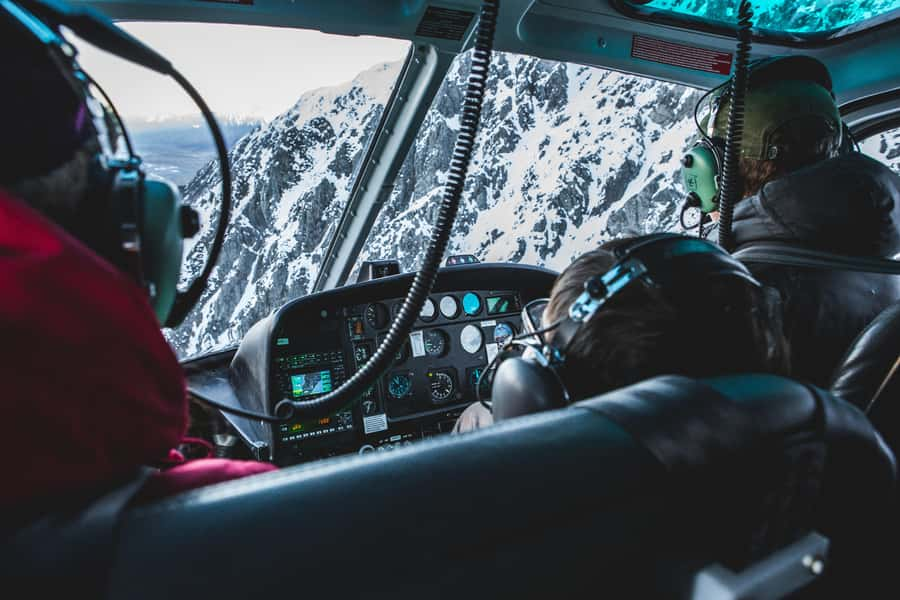
The Tasman Glacier is the main eastern-side feature on the return section. It is part of the Aoraki Mount Cook National Park area and gives the aircraft a long corridor of ice and high peaks to follow.
The flight then tracks south down the Tasman. You pass through the Grand Plateau and near the Hochstetter Icefall, a striking area where broken ice descends from the high slopes. From the air, an icefall is easier to understand than from a distant valley viewpoint. You can see the way the ice fractures and drops through the mountain terrain.
This portion of the trip is also where the route becomes most closely tied to Aoraki Mount Cook. You are not just circling the mountain from a distance. The itinerary takes you toward the east face and under that side of the peak before descending over the Tasman Terminal Lake.
That approach gives you several changing angles. Peaks that looked distant earlier become walls of rock and snow. The aircraft’s movement lets you see the relationships between the mountain, the glacier, and the terminal lake rather than viewing each one as an isolated attraction.
More Scenic Helicopter Flights in Mount Cook:
- Helicopter Scenic Flight over Victoria Falls 12-13 minutes Flight
★ 5.0 · 1,391 reviews - Niagara Falls, Canada: Scenic Helicopter Flight
★ 4.8 · 1,068 reviews - Cairns: Great Barrier Reef Cruise & Scenic Helicopter Flight
★ 4.7 · 1,003 reviews - Cape Town: 12-Minute City Scenic Helicopter Tour
★ 4.8 · 853 reviews
Passing under Aoraki Mount Cook
The flight’s signature moment is the pass beneath the east face of Aoraki Mount Cook. At 3,724 meters, the mountain is New Zealand’s highest, and the flight route gives you a close aerial view without requiring a long alpine excursion.
You should keep your camera ready, but do not spend all 55 minutes looking through a screen. Phone and camera use is allowed, and you can take photos during the flight. Still, the best view may last only a few seconds as the aircraft turns or moves past a ridge.
The route also includes views of Mount Tasman and Mount Sefton. These peaks help fill out the story of the region. Aoraki Mount Cook gets the attention, but the surrounding mountains create the scale and drama that make the flight worthwhile.
One practical point deserves attention: aircraft seating can affect your experience. A recent passenger had a poor view from the middle seat immediately behind the rotor blade area in a three-seat arrangement. You cannot assume every seat offers the same sightline, so it is sensible to ask about seating before boarding if the operator can provide that information.
Helicopter or ski plane?
The choice of aircraft is a central part of this experience. The booking allows a scenic flight in either a helicopter or ski plane, but the final aircraft depends on availability, conditions, and operational decisions.
A helicopter usually feels closer to the terrain because it can hover and maneuver around viewpoints. It is the natural choice if you want the aircraft itself to feel like part of the adventure. A helicopter substitution also helped preserve one passenger’s trip after a planned flight was shortened and then canceled because of changing weather.
The ski plane offers a different kind of appeal. It connects naturally with the glacier setting, and one passenger described landing and taking off from a glacier as the best part of the experience. That type of landing should not be treated as guaranteed, since weather, snow, safety, and the day’s operation control what is possible.
If you have a strong preference, ask before booking how aircraft allocation works. The important point is that you should be ready for the experience to change. A switch from plane to helicopter may be the difference between flying and losing the day entirely.
Weather is part of the decision
Mountain flying depends on conditions, and this flight is no exception. If weather makes the route unsafe, the operator may cancel and offer a full refund or reschedule the flight.
That policy is useful, but it does not remove the inconvenience. If your South Island schedule is tight, try to place this flight early in your stay rather than on your final day. That leaves room for another attempt if cloud or wind interrupts the first booking.
Changing weather can also affect the length or aircraft. One flight was shortened because conditions changed, and a later flight was canceled. The operator then moved the passenger to a helicopter flight. This is a good example of why flexibility matters more here than on a museum visit or a fixed road tour.
Clear weather is not only better for photographs. It changes what you can understand from the flight. The route is built around relationships between peaks, ice, coast, and lake. Cloud over one section can remove a major piece of that picture.
What the small group adds
The six-person limit is one of the better features for a flight at this price. You are not dealing with a large crowd moving through a long boarding process or competing with dozens of people for every window.
The small group also makes the guide’s commentary more useful. You can hear the English explanation as the aircraft moves across the route, and the guide can point out features in real time. The flight is short, so every minute matters.
On the other hand, a small aircraft leaves less room for personal items. Bags are not allowed, and selfie sticks are prohibited. You should arrive in comfortable clothing and keep your camera or phone ready without bringing loose gear that cannot be taken aboard.
The flight is not suitable for people with mobility impairments, and the maximum passenger weight listed is 254 pounds, or 115 kilograms. These limits are worth checking before you pay, especially since combined passenger weight can also lead to a schedule change.
Is $447 good value?
I would call the price reasonable for the right occasion, but not cheap. You are paying for a 55-minute flight, an expert guide, the aircraft operation, and access to views that would take far longer to reach on foot.
The value is strongest if you have limited time in the Aoraki Mount Cook area, if mountain views are a major reason for your trip, or if you want to see Fox, Franz Josef, and Tasman Glaciers in one outing. It is also a practical choice if hiking or long alpine walks are not part of your plans.
The value is weaker if your budget is tight or if you mainly want a guaranteed clear view. Mountain weather can cancel the experience, and even a flight that operates may have cloud in important areas. The 4.1 rating from six published ratings reflects that mixed reality: the best flights can be memorable, while poor visibility or cancellation can leave you disappointed.
You should also factor in the aircraft choice. If the operator assigns a ski plane when you hoped for a helicopter, or changes the plan because of weather, the experience may differ from what you pictured. The route remains the main reason to book, not a promise of one exact aircraft or landing.
Who should book this flight?
I would recommend it to you if you want a broad view of the Southern Alps in a short amount of time. It suits photographers, first-time visitors to the Mount Cook area, and anyone who wants to see the glaciers from above without committing to a demanding walk.
It is also a strong choice for a special occasion, provided you can accept the weather risk. The chance to fly near Aoraki Mount Cook, cross the Main Divide, and see three major glacier areas gives the trip a clear sense of purpose.
I would be more cautious if you dislike flying, need guaranteed timing, have limited mobility, or cannot adjust your schedule. One passenger had to cancel because of fear, and the staff handled that situation with understanding, but you should still consider how comfortable you are with a small aircraft before booking.
The safest plan is to keep your day flexible, bring only your phone or camera, and treat the aircraft type as part of the day’s variables. If Angus is piloting your flight, you may be in particularly good hands, as his calm and helpful work has received specific praise.
Should you book the Mt Cook scenic flight?
Book it if the Southern Alps are a top priority and $447 fits your budget. The route is unusually full for 55 minutes, with Aoraki Mount Cook, Mount Tasman, Mount Sefton, Fox Glacier, Franz Josef Glacier, Tasman Glacier, the Grand Plateau, and the Hochstetter Icefall all included in the plan.
Do not book it expecting perfect visibility or a guaranteed glacier landing. Choose it for the chance to see the region from above, accept that weather may alter the plan, and leave enough space in your schedule for a rescheduled flight. For many visitors, that balance of risk and reward is worth it.
FAQ
How long is the scenic flight?
The flight lasts 55 minutes.
Can I choose between a helicopter and a ski plane?
The experience is offered by helicopter or ski plane. The aircraft used may depend on availability, weather, and operating conditions.
Which mountains can I see?
The route includes views of Aoraki Mount Cook, Mount Tasman, and Mount Sefton.
Which glaciers are included?
You can expect aerial views of Fox Glacier, Franz Josef Glacier, and Tasman Glacier.
Is a guide included?
Yes. An English-speaking live guide provides commentary during the flight.
How many people are in the group?
The group is limited to six participants.
Can I use my phone or camera during the flight?
Yes. Phones and cameras are allowed during the flight. Selfie sticks and bags are not allowed.
What happens if bad weather cancels the flight?
If the flight is canceled because of weather, you can receive a full refund or reschedule the tour.
More Ski Trips in Mount Cook
- Mount Cook: Ski Plane and Helicopter Glacier Combo Flight
★ 4.6 · 271 reviews - 45-Minute Mount Cook Ski Plane and Helicopter Combo Tour
★ 4.5 · 107 reviews
Newly added flights around Mount Cook
- Mount Cook: Mountains High 40-Minute Helicopter Flight★ 5.0 · 53 reviews
- Mount Cook Alpine Explorer Helicopter Flight with Alpine Landing★ 4.0 · 22 reviews
- Mount Cook: Alpine Vista Helicopter Flight with Alpine Landing★ 4.5 · 39 reviews
- Mount Cook Scenic 35 Minute Helicopter Flight★ 5.0 · 6 reviews
- Glentanner High Country Heli Hike★ 5.0 · 52 reviews
- 25-Minute Helicopter flight including an alpine landing★ 4.5 · 49 reviews
- Mount Cook: 3-Hour Tasman Glacier Heli-Hike★ 4.5 · 29 reviews
- 55-Minute Grand Circle Helicopter★ 4.5 · 36 reviews
Mount Cook Helicopter Tours, compared.
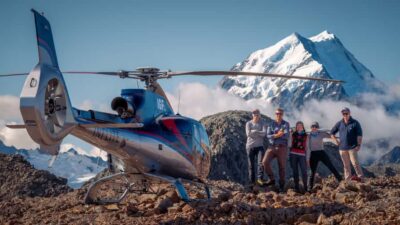
Mount Cook: Scenic Helicopter Flight with Alpine Landing
Read our review →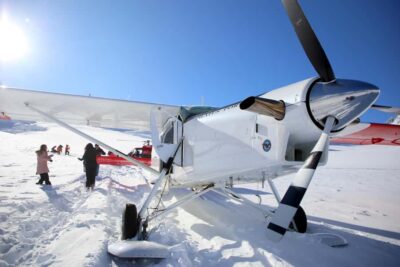
Mount Cook: Ski Plane and Helicopter Glacier Combo Flight
Read our review →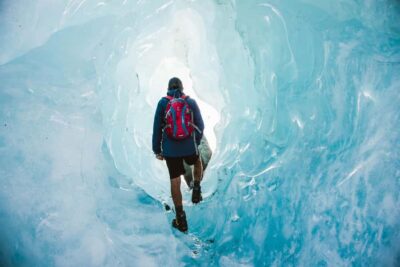
Mount Cook: 3 Hour Heli Hike to the Tasman Glacier
Read our review →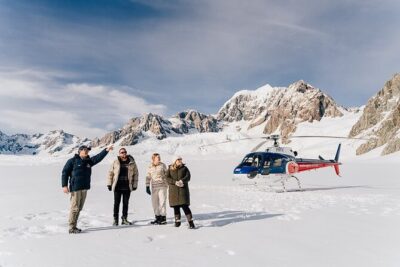
Mount Cook and The Glaciers 55-Minute Helicopter Flight
Read our review →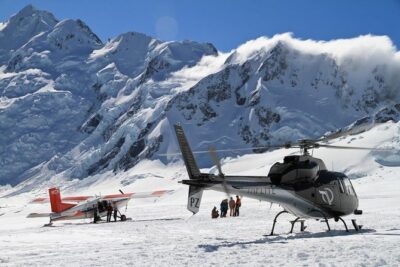
45-Minute Mount Cook Ski Plane and Helicopter Combo Tour
Read our review →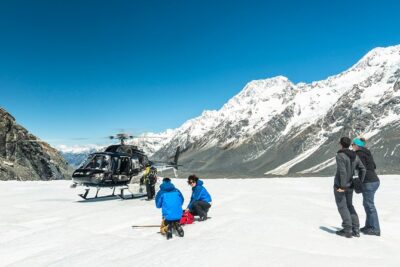
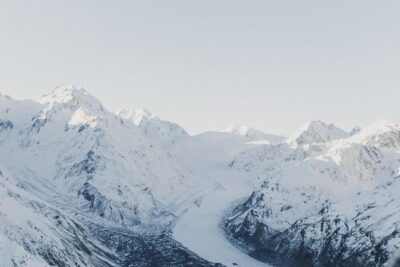
45-Minute Glacier Highlights Helicopter Tour from Mount Cook
Read our review →
Mount Cook: Mountains High 40-Minute Helicopter Flight
Read our review →Browse the lists this tour appears in