
Review · KATHMANDU HELICOPTER TOURS
Everest base camp trek & Heli return
The clever idea here is simple: walk one way to Everest Base Camp and fly back by helicopter. In seven days, you pass through Sherpa villages, rhododendron forests, monasteries, high mountain valleys, and the famous Khumbu trail without retracing every step.
I like two things right away. First, the helicopter return saves several days of downhill walking. Second, the route includes Kala Patthar at 5,545 meters, where the Everest view is often the visual high point of the whole trip. The drawback is just as clear: this is a fast schedule with no extra acclimatization day, so you need good fitness and sensible preparation.
Key points to know before booking
- Seven days, one-way trekking: You hike from Lukla to Base Camp, then fly from Gorakshep to Kathmandu.
- Kala Patthar is included: The early morning climb gives you a major Everest viewpoint before the helicopter ride.
- High-altitude pace: You reach 5,364 meters at Base Camp and 5,545 meters at Kala Patthar in a compact itinerary.
- Tea-house lodging: Overnight stays are in basic local lodges, with breakfast, lunch, and dinner included during the trek.
- Small group format: The maximum group size is 15 people, with an English-speaking, government-licensed guide.
- Strong guide support: Padam is praised for his calm manner in the mountains, while Kesh is noted for clear WhatsApp communication and practical help.
Why this Everest trek works in seven days
Most Everest Base Camp routes take longer because they include rest and acclimatization days, then require a full walk back to Lukla. This version cuts out the return trek. You still walk the classic route in, but after Kala Patthar, a shared helicopter carries you from Gorakshep back to Kathmandu.
That design makes the trip appealing if you have limited holiday time. It also keeps the walking focused on the best-known section of the Khumbu route. You see Namche Bazaar, Tengboche, Dingboche, Lobuche, Gorakshep, Base Camp, and Kala Patthar without spending extra days on the return trail.
The tradeoff is pace. Your body has to adjust to altitude while the route continues upward each day. There is no scheduled rest day in Namche or Dingboche, and the final two days are especially demanding. I would treat this as a serious high-altitude trek, not as a quick sightseeing outing.
The tour costs $3,195 per person. That price includes the Kathmandu to Lukla flight, the Gorakshep to Kathmandu helicopter, a guide, permits, entrance fees, tea-house accommodation, airport transfers, and six days of meals. The helicopter return is the major value point, since it replaces several days of walking and lowers the total time needed.
You still need to budget for Kathmandu hotels before and after the trek, personal gear, drinks, bottled water, Wi-Fi, battery charging, hot showers, insurance, and emergency evacuation. Those extras matter in Nepal, especially on a route where simple services at altitude cost more than you may expect.
More Himalaya Helicopter Tours in Kathmandu:
- Everest Base Camp Helicopter Tour landing at Everest View Hotel
★ 5.0 · 668 reviews - Everest Base Camp Helicopter Tour landing at Hotel Everest View
★ 5.0 · 218 reviews - Everest Base Camp Trek with Helicopter Return from Gorakshep to Lukla
★ 5.0 · 161 reviews
Day 1: Lukla to Phakding through the lower Khumbu
The trip starts early, with a meeting time of 5:15 a.m. at the TIA Domestic Terminal parking lot in Kathmandu. After the flight to Lukla, you begin walking toward Phakding at about 2,600 meters.
The trek takes roughly three to four hours. This first day is relatively short by Himalayan standards, which helps you settle into the rhythm of walking, lodge meals, and changing altitude. Phakding is your first overnight stop, and the tea-house setting gives you an immediate sense of how the trek operates.
Do not expect a resort-style stay. Tea houses provide a bed and basic shared facilities, while personal comforts such as hot showers, Wi-Fi, charging, and bottled water cost extra. That is normal for this route, but it is worth knowing before you arrive.
The Lukla flight is an important practical detail. The schedule begins early, and the trip depends on mountain air travel. One past account describes weather delays and the need to stay flexible, so do not plan a tight international connection immediately after the trek.
Day 2: Phakding to Namche Bazaar
From Phakding, you walk for about four to five hours to Namche Bazaar, reaching roughly 3,500 meters. This is where the route begins to feel properly Himalayan.
Namche is the main settlement of the Khumbu region and a key stopping point on the way to Everest. The trail climbs through mountain scenery and reaches a town set in a broad bowl of steep hills. The afternoon is set aside for exploring, although this is not a formal acclimatization day.
That distinction matters. You gain close to 900 meters from Phakding to Namche, then continue upward the next morning. Walk steadily, drink as directed by your guide, and avoid turning the first steep ascent into a race.
The itinerary lists admission as free at each stop, but permits and entrance fees are already included in the package. You should not need to arrange those separately.
Day 3: Namche to Tengboche
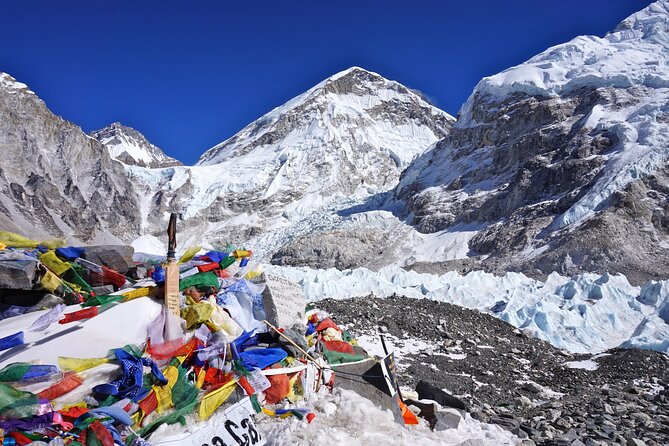
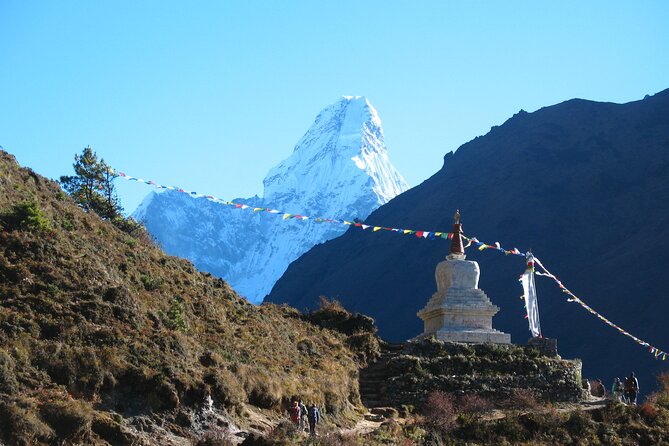
The walk from Namche to Tengboche takes about four to five hours and reaches approximately 3,870 meters. This section combines some of the route’s best cultural and natural details.
You pass through rhododendron forest, along Mani walls, and beside chortens. The trail also opens to wide Himalayan views, including striking peaks around the Khumbu region. Tengboche is known for its important monastery, though the information provided does not specify a formal monastery visit, so treat the settlement and surrounding views as the main features included in the route.
This is a beautiful day, but the distance does not tell the whole story. You lose altitude in places and then climb again, which can make the trail feel harder than a simple four-hour walk. The combination of thinner air and repeated ups and downs requires patience.
Padam is one guide associated with this operation, and his support is especially useful on days like this. He has been described as calm before the Lukla flight, friendly with questions, and experienced in the mountains. The company has also been praised for responsive communication from Kesh, who handles trip arrangements and stays available when plans change.
More Heli-Hike Trips in Kathmandu:
- Everest Base Camp Trek with Helicopter Return to Lukla – 10 Days
★ 5.0 · 34 reviews - Everest Base Camp Trek with Helicopter Return -11 Days
★ 5.0 · 12 reviews - Helicopter Return Everest Base Camp Trek, KTM-LUKLA & Gorakshep-KTM by Heli
★ 5.0 · 9 reviews - Everest Base Camp Trek with Helicopter Return – 10 Days
★ 5.0 · 9 reviews
Day 4: Tengboche to Dingboche
The route from Tengboche to Dingboche takes around six hours. You first descend through rhododendron forest to Deboche, then cross a bridge over the Imja Khola before climbing again.
The bridge crossing adds a memorable physical moment to the day, with the river below and the trail turning upward afterward. You continue through Pangboche and Somare before reaching Dingboche, at about 4,410 meters.
This is a major altitude gain, and it is also the point where the schedule feels most demanding. Dingboche is often used as an acclimatization base on longer Everest routes, but this seven-day plan does not include a spare day here. That makes the trek efficient, but it gives you less room to adjust if you feel unwell or if weather affects the schedule.
The villages and trail features are valuable because they keep the walk connected to local life. You are not simply marching toward a famous mountain. You pass settlements, walls built for prayer, bridges, and valleys used by the Sherpa communities of the region.
Day 5: Dingboche to Lobuche
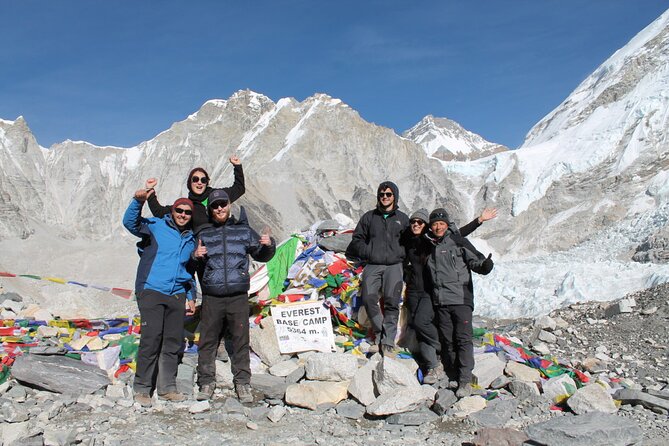
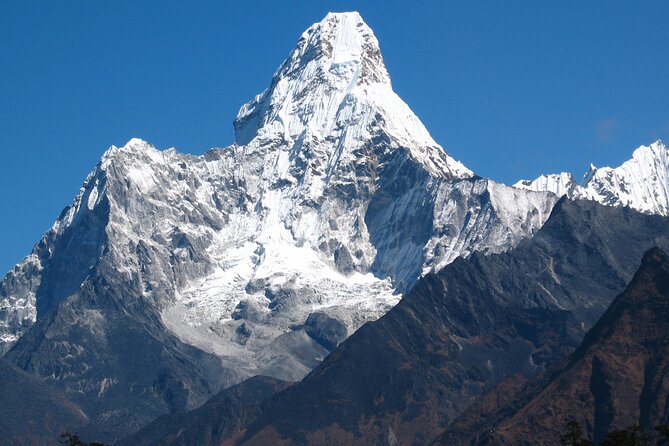
The walk to Lobuche takes about six hours. Along the way, you get views of Ama Dablam, Lhotse, Phortse Peak, and Cholatse, with the trail passing through the Dughla area before continuing higher.
This day feels more open and exposed than the lower sections. Forest becomes less central, and the route takes on a colder, higher character. The scenery is powerful, but the air is thinner and the walking pace naturally slows.
Lobuche is around 4,940 meters, so you are already close to the altitude where even ordinary tasks can feel tiring. The best approach is to keep your expectations practical. The goal is not speed. The goal is to arrive in good enough shape for the long Base Camp day ahead.
Meals are included throughout the six trekking days: breakfast, lunch, and dinner. Drinks, mineral water, charging, Wi-Fi, and hot showers are not included. Carrying some personal snacks may be useful, but the supplied details do not specify what food is available at each lodge.
Day 6: Lobuche to Everest Base Camp and back to Gorakshep
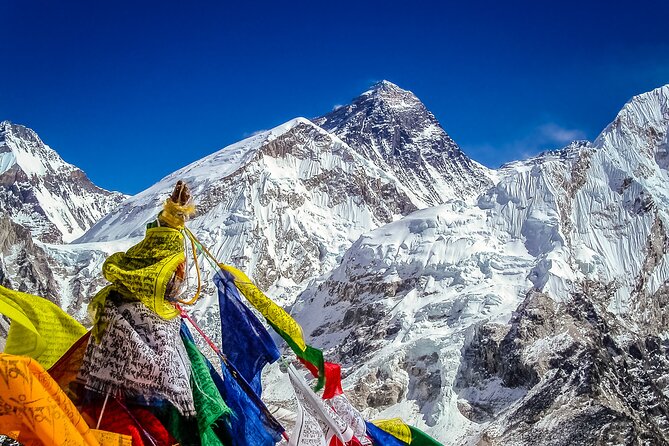
This is the longest and most important walking day, taking about seven hours in total. You leave Lobuche, walk to Gorakshep, stop for lunch, then continue to Everest Base Camp at 5,364 meters before returning to Gorakshep for the night.
Gorakshep is the last overnight stop in the plan and serves as the base for both Base Camp and Kala Patthar. The trail from Lobuche to Gorakshep is not just a short stroll, and the high altitude makes the distance feel longer than the clock suggests.
At Base Camp, you reach the destination that gives the trek its name. The actual experience depends on the season and conditions, and the supplied details do not promise a view of climbers, tents, or a particular level of activity. What is certain is that you reach the Base Camp area at 5,364 meters and then walk back to Gorakshep.
This day requires the most discipline. Eat lunch at Gorakshep, follow the guide’s pace, and keep enough energy for the return. You should also remember that Base Camp itself is not the best viewpoint of Everest. That is why the next morning’s Kala Patthar climb matters so much.
Day 7: Kala Patthar and the helicopter back to Kathmandu
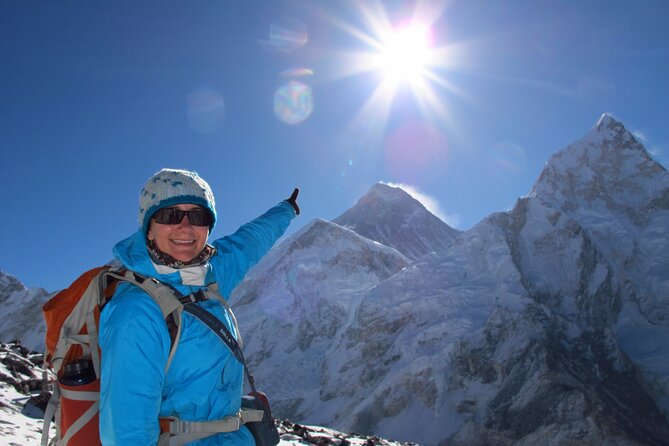
The final day starts early with a climb to Kala Patthar at 5,545 meters. The ascent and return to Gorakshep take about two hours, followed by breakfast and the helicopter flight back to Kathmandu.
Kala Patthar is the tour’s great viewpoint. From the summit area, you can see Everest and other Himalayan peaks, making this a strong finish to the walking portion. The early start is practical because morning conditions often provide the clearest mountain views, although weather can never be guaranteed.
After breakfast, you take a shared helicopter from Gorakshep to Kathmandu. This is not a private flight just for you, so the exact departure may depend on the aircraft and operating conditions. Still, it is a remarkable way to finish: after days of walking at altitude, you return over the valleys instead of retracing the entire route on foot.
The listed helicopter time is about two hours. The activity ends back at the Kathmandu meeting point, with airport pickup and drop-off included for the trek. Hotels in Kathmandu are not included, so arrange those separately.
Guides, group size, and the human side of the trip
The group can include up to 15 people, and an English-speaking government-licensed trekking guide is included. A group of that size is still manageable, but it is not the same as a private trek. Walking speeds and altitude responses may vary, so expect the guide to set the practical pace.
Padam receives particular praise for his friendly, reassuring manner and mountain experience. That kind of calm support matters when you are facing a very early flight, an exposed trail, or a long day above 4,500 meters.
Kesh is associated with clear WhatsApp communication and hands-on support before and during the trip. He has also helped solve practical problems, including finding boots for a client who arrived without suitable footwear. I would still bring your own properly broken-in trekking boots, but responsive help is useful when plans change.
The company has also arranged trips in other parts of Nepal, Bhutan, and Tibet. For this trek, the key question is not whether the operator can arrange travel in general. It is whether you are comfortable with a compressed Everest schedule and basic high-altitude lodging.
What you need to bring and what the price leaves out
Your personal trekking gear is not included. The supplied details do not provide a full packing list, so you need to confirm exact equipment needs before departure. At minimum, your preparation should account for cold conditions, long walking days, and the high altitude reached on Days 6 and 7.
Travel insurance is also not included, and neither is emergency evacuation. This deserves serious attention because helicopter transport from high altitude can be costly, and the policy must cover the type of trekking you are doing.
The package includes the major route services:
- Airport pickup and drop-off for the trek
- Kathmandu to Lukla flight
- Gorakshep to Kathmandu shared helicopter
- Tea-house accommodation
- Trekking permit and entrance fees
- English-speaking licensed guide
- Six breakfasts, six lunches, and six dinners
The experience is non-refundable and cannot be changed for any reason after booking. If the operator cancels because the minimum group size is not met, you are offered another date or experience, or a full refund. That makes personal insurance and careful date planning especially important.
Who should book this Everest Base Camp plan?
I would recommend it to a fit hiker who has seven days for the Khumbu, wants the classic Base Camp route, and values a helicopter return more than extra time for acclimatization. It also suits someone who prefers a guided trip with meals, permits, transfers, and flights arranged in one package.
I would be cautious if this is your first demanding mountain trip or if you want a relaxed pace. The route reaches extreme altitude quickly, and the absence of a rest day gives you little flexibility. The itinerary is physically moderate by the operator’s description, but the altitude makes it far more serious than an ordinary week of walking.
The $3,195 price makes the most sense if you place a high value on time. You are paying for the one-way design, helicopter return, guide support, permits, flights, lodging, and meals. If you would rather save money and have more time, a longer standard route with a walking return may be a better fit, but that is not the trip offered here.
FAQ
How long does the Everest Base Camp and helicopter return trip last?
The trip lasts approximately seven days, beginning with the flight from Kathmandu to Lukla and ending back in Kathmandu after the helicopter from Gorakshep.
Where does the trek begin?
The trek begins after an early flight from Kathmandu to Lukla. The meeting point is the TIA Domestic Terminal parking lot in Kathmandu.
What time is the meeting?
The stated start time is 5:15 a.m.
Is airport pickup included?
Yes. Airport pickup and drop-off are included for arrival and departure connected with the trek.
Where do I sleep during the trek?
You stay overnight in tea-house lodges. Hotels in Kathmandu before and after the trek are not included.
Is food included?
Yes. Breakfast, lunch, and dinner are included for six days. Personal drinks, mineral water, and other beverages are not included.
Is the helicopter flight private?
No. The return from Gorakshep to Kathmandu is by shared helicopter.
How high does the trek reach?
Everest Base Camp is listed at 5,364 meters, and Kala Patthar reaches 5,545 meters.
What fitness level do I need?
You should have a moderate level of physical fitness. The schedule includes walking days of roughly three to seven hours and gains altitude each day.
What happens if the operator cancels because there are not enough people?
You are offered a different date or experience, or a full refund. Personal cancellations and amendments are non-refundable.
Should you book it?
Book this trip if time is your main constraint and you want the strongest highlights of the Everest route without walking back to Lukla. The Kala Patthar sunrise climb, Base Camp visit, tea-house stays, and helicopter return create a compact and memorable plan.
Think twice if you need a slower altitude schedule, want private helicopter transport, or expect comfortable lodging and flexible cancellation. For a fit hiker who accepts the pace, prepares carefully, and carries proper insurance, this is a smart short-format way to reach Everest Base Camp.
Newly added flights around Kathmandu
- Guaranteed Landing at Everest Base Camp Kalapathar by Helicopter★ 5.0 · 38 reviews
- Day Tour to Everest Base Camp By Helicopter★ 5.0 · 16 reviews
- Mount Everest Helicopter Tour with Landings★ 5.0 · 2 reviews
- Kathmandu To Lukla By Helicopter Flight★ 5.0 · 6 reviews
- Mount Everest Scenic Helicopter Tour★ 5.0 · 6 reviews
- Everest Helicopter Tour★ 5.0 · 3 reviews
- Everest Base Camp Helicopter Tour with Hotel Everest View Landing★ 5.0 · 52 reviews
- Langtang Helicopter Tour★ 5.0 · 6 reviews
Kathmandu Helicopter Tours, compared.
Everest Base Camp Helicopter Tour landing at Everest View Hotel
Read our review →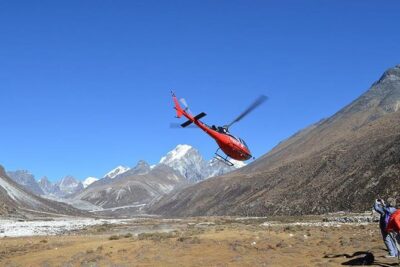
Everest Base Camp Helicopter Tour landing at Hotel Everest View
Read our review →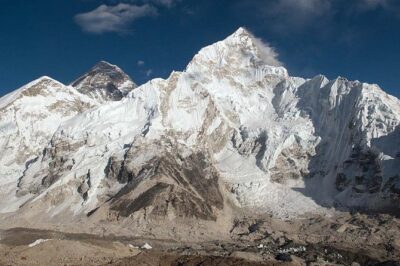
Everest Base Camp Trek with Helicopter Return from Gorakshep to Lukla
Read our review →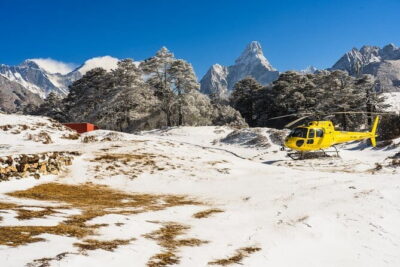
Everest Base Camp helicopter tour with landing
Read our review →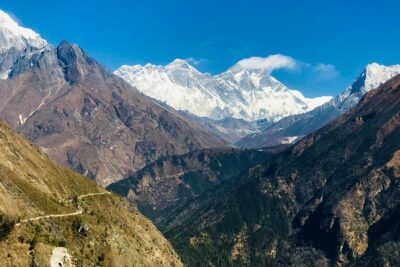
Everest Base Camp Helicopter Tour with Hotel Everest View Landing
Read our review →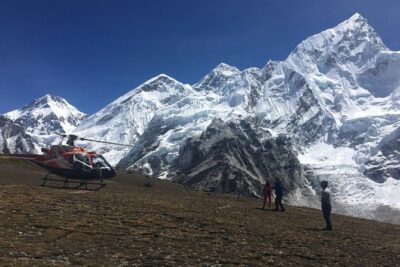
Guaranteed Landing at Everest Base Camp Kalapathar by Helicopter
Read our review →Everest Base Camp Helicopter Tour landing at Everest View Hotel.
Read our review →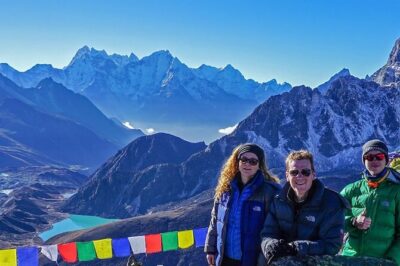
Everest Base Camp Trek with Helicopter Return to Lukla – 10 Days
Read our review →Browse the lists this tour appears in