
Review · KATHMANDU HELICOPTER TOURS
Everest Base Camp Trek with Helicopter Return -11 Days
Everest Base Camp is the main prize here, but the helicopter return changes the usual trek. You still earn the walk through the Khumbu Valley, spend time above 5,000 meters, and reach Kala Patthar, but you avoid retracing the same trail for another four or five days. I like the two acclimatization days, and I like that meals, tea-house lodging, permits, porters, and emergency arrangements are bundled together.
The catch is simple: this is a tough trek compressed into 11 days. Altitude is the real test, not technical climbing, and the shared helicopter depends on good weather. The $3,500 price can be fair for the transport, staff, permits, and flight home, but you should confirm exactly what happens if the helicopter cannot fly.
Key points to know before you book
- Kala Patthar is the high point: At 5,545 meters, it offers the best stated viewpoint for Mount Everest on this route.
- The return saves several walking days: You fly from the Everest region back to Kathmandu after the high-altitude trek.
- Two acclimatization days are built in: One comes at Namche Bazaar and another at Dingboche.
- The staff setup is practical: One porter is provided for every two clients, with an experienced guide and first-aid supplies.
- The schedule is physically serious: Walking days run from three to seven hours, with the hardest altitude coming near Lobuche, Gorakshep, and Base Camp.
- The helicopter is shared: The flight back is not a private charter, and poor weather can force a change of plan.
Why this 11-day Everest trek works
A standard Everest Base Camp walk often takes about two weeks or more because you need time to climb slowly and return on foot. This version keeps the climb toward Base Camp but replaces the descent with a helicopter flight. That saves your knees and your calendar, though it does not make the uphill section easy.
I like the route’s basic rhythm. You begin with a short walk from Lukla to Phakding, then have a longer push to Namche Bazaar. After time to adjust there, you continue through Tengboche, Dingboche, Lobuche, Gorakshep, and Base Camp. The route gives you recognizable Himalayan stops instead of treating the trek as one long march.
The plan also includes two acclimatization days. That matters far more than a fancy hotel or a faster vehicle. At Namche, you visit Khumjung Village and the Hotel Everest View. At Dingboche, you have a second rest day before the trail climbs sharply toward Lobuche and Gorakshep.
Still, 11 days leaves little spare time. If flights are delayed, weather changes, or you need an extra rest day, the schedule may become difficult. The service includes travel and rescue arrangements, but your own travel and rescue insurance is not included. I would not treat this as a casual holiday with a scenic walk attached.
More Himalaya Helicopter Tours in Kathmandu:
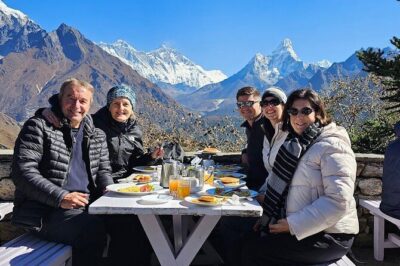
- Everest Base Camp Helicopter Tour landing at Everest View Hotel
★ 5.0 · 668 reviews - Everest Base Camp Helicopter Tour landing at Hotel Everest View
★ 5.0 · 218 reviews - Everest Base Camp Trek with Helicopter Return from Gorakshep to Lukla
★ 5.0 · 161 reviews
Day 1: Arrive in Kathmandu and keep it easy
Your trip begins with airport pickup at Tribhuvan International Airport and a private transfer to the hotel. Two nights in a three-star Kathmandu hotel are included, with breakfast.
Arrival day is mainly for landing, sorting gear, and meeting the team. The next morning starts early, so you will want a quiet evening rather than a late night in the city. The package also includes the final-night farewell dinner at an authentic Nepalese restaurant with cultural performance, giving you a more relaxed way to finish than the trek itself allows.
Because the experience begins at the airport and ends back at the same meeting point, the arrival and departure transfers are useful. Confirm the hotel details and the exact flight plan before setting out, especially if your arrival time is late or you have extra luggage.
Day 2: Lukla to Phakding, the first Himalayan walk
The morning flight from Kathmandu takes you to Lukla at 2,860 meters. The published start time is 6:00 a.m., which reflects the need to reach the airport early and make use of the day’s flight schedule.
From Lukla, you walk to Phakding at 2,610 meters. The stated walking time is three to four hours, making this a relatively gentle introduction. You receive breakfast, lunch, and dinner during the trekking portion, and tea-house accommodation is included.
This first day is valuable because it lets your body begin adjusting before the route climbs higher. Do not mistake the short distance for a free pass. You may still be tired from an early airport start, and the trail’s uneven footing can feel different from ordinary day hiking.
The operator lists Kathmandu to Lukla or Ramechhap to Lukla flights. That wording matters because the departure airport can affect your morning plans. Ask which airport applies to your date and how the transfer will be handled.
Day 3: Phakding to Namche Bazaar
The trail to Namche Bazaar takes six to seven hours and reaches 3,446 meters. This is your first long day and your first major altitude gain.
Namche is more than a place to sleep. It is the main settlement for this section of the Khumbu Valley, and it gives you a practical base before the route turns higher. The climb can feel demanding, so steady pacing is more useful than trying to stay with the fastest person in the group.
Your guide matters here. Several past clients singled out guides such as Prakash Adhikari and Dikpal for patient support, route planning, and attention to safety. The operator does not promise one particular guide, so ask who will lead your departure. You should also ask how the team handles headaches, nausea, or unusual fatigue at altitude.
More Heli-Hike Trips in Kathmandu:
- Everest Base Camp Trek with Helicopter Return to Lukla – 10 Days
★ 5.0 · 34 reviews - Helicopter Return Everest Base Camp Trek, KTM-LUKLA & Gorakshep-KTM by Heli
★ 5.0 · 9 reviews - Everest Base Camp Trek with Helicopter Return – 10 Days
★ 5.0 · 9 reviews - Everest Base Camp trek with Helicopter return 9 days
★ 5.0 · 8 reviews
Day 4: Namche acclimatization, Khumjung, and Hotel Everest View
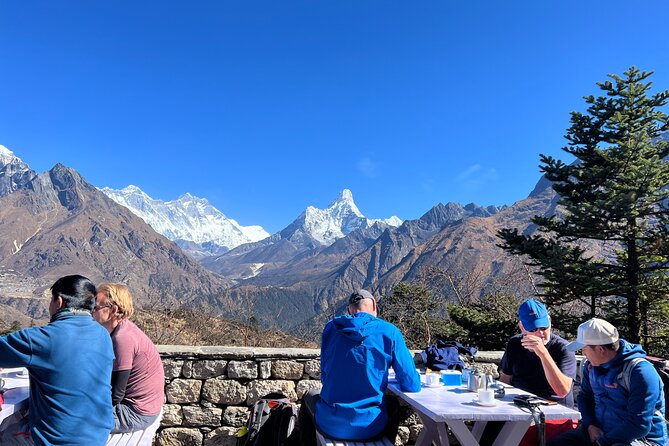
The first rest day is active rather than lazy. You visit Khumjung Village and the Hotel Everest View at 3,880 meters. The point is to gain height during the day and then sleep lower in Namche.
That pattern helps your body adjust better than simply staying in bed. It also gives the route more character. Khumjung provides a village stop, while the Hotel Everest View is included for its high position and mountain outlook.
I like this day because it balances practical acclimatization with something to see. You are not burning a day without moving, but you are also not forcing a full trekking stage. Keep your pace moderate and use the time to check boots, layers, batteries, and water.
Bottled water, coffee, and tea are not included. Personal costs such as hot showers, laundry, phone calls, battery charging, and bar bills are also extra. Those charges can add up in mountain lodges, so carry some local currency and do not assume every comfort is covered.
Day 5: Namche to Tengboche and its famous monastery
The walk to Tengboche at 3,860 meters takes five to six hours. The route passes through rhododendron and juniper country, then brings you to Tengboche Monastery, described as the largest monastery in the Everest region.
This is one of the route’s strongest cultural stops. The monastery gives the trek a sense of place beyond mountain views, and the setting makes Tengboche feel like more than another overnight halt. You should allow time to appreciate it rather than treating it only as a lunch or sleeping stop.
The altitude is now high enough that a normal walking pace can feel slow. That is not a sign of failure. It is the sensible way to protect your energy for the harder days ahead.
Day 6: Tengboche to Dingboche
The trail continues to Dingboche at 4,360 meters, with five to six hours of walking. This is a meaningful rise from Tengboche, and the route is described as relatively steep in this area.
Dingboche is the point where the trek begins to feel genuinely high. Nights can be difficult for some people, and the dry air, thin atmosphere, and long walking days can make small tasks feel tiring. Your guide should be watching the group closely, but you also need to speak up early if you feel unwell.
The included lodge accommodation is basic mountain lodging rather than a city hotel. Meals are included, but hot showers, drinks, charging, and other extras are not. Pack your expectations along with your warm clothing.
Day 7: A second acclimatization day in Dingboche
The second acclimatization day is placed before the hardest section of the route. You remain around 4,360 meters rather than adding another long stage.
This is a useful design choice. From here, the trek climbs toward Lobuche at 4,910 meters, then reaches Gorakshep at 5,160 meters and Base Camp at 5,360 meters. The rest day gives you a better chance of reaching those points without rushing.
Use this day to eat well, drink regularly, and keep your gear organized. The goal is not to prove how much you can do. The goal is to arrive at Base Camp with enough strength left for Kala Patthar.
Day 8: Dingboche to Lobuche
The walk to Lobuche takes five to six hours and reaches 4,910 meters. The scenery becomes more severe as the route leaves the lower forest behind.
Lobuche is an important overnight stop because it breaks the climb before Gorakshep. Even with that break, this is not an easy day. You are walking for several hours at an altitude where your pace will likely slow.
Your guide and porter arrangement becomes especially valuable here. One porter is provided for every two clients, and a duffle bag is supplied for the trek and returned afterward. You still need to carry a daypack with the items you require during the day, while the porter handles the main load.
The exact weight limit for porter bags is not provided, so confirm it before packing. The same applies to extra porter costs, which are listed as personal expenses.
Day 9: Everest Base Camp and Gorakshep
This is the longest and most dramatic walking day. You walk from Lobuche to Everest Base Camp at 5,360 meters, then continue to Gorakshep at 5,160 meters. The total walking time is listed as six to seven hours.
Base Camp is the emotional center of the trek. It is not a summit viewpoint, and Mount Everest may not look as commanding from Base Camp as it does from higher viewpoints. Its value comes from reaching the place used by climbers preparing for the mountain.
Gorakshep is your overnight stop before the final early climb. At this altitude, the combination of distance and thin air can be hard. Keep your breathing calm, follow the guide’s pace, and do not hide symptoms to protect the schedule.
The information describes the helicopter return as Gorakshep to Kathmandu, while the daily plan places the helicopter after the Kala Patthar climb. Ask the operator to confirm the exact pickup point and timing. That detail can change with weather, aircraft availability, and the group’s pace.
Day 10: Kala Patthar at 5,545 meters, then helicopter to Kathmandu
The final major effort is the three to four-hour walk from Gorakshep to Kala Patthar at 5,545 meters. This is the highest point on the route and the main reason many people choose this particular viewpoint.
From Kala Patthar, you are positioned for broad views of Everest and other famous peaks. The climb is short on paper, but the altitude makes every step count. I would treat this as the hardest morning of the trip, even though the walking time is shorter than the previous day.
Afterward, you return by shared helicopter to Kathmandu. This is the tour’s great convenience. You avoid the long walk back through the same villages and arrive in the city far sooner than on a fully overland return.
It is also the part most exposed to weather. The experience requires good conditions, and a cancellation caused by poor weather may lead to a different date or a full refund. Ask what support is provided if the helicopter cannot fly on the planned day, since the 11-day schedule has little spare room.
Day 11: Departure from Kathmandu
The final day includes breakfast and airport departure. Since the helicopter brings you back to Kathmandu on Day 10, you have a buffer before leaving the country, though the listed plan does not spell out a full extra sightseeing day.
The farewell dinner is included on the last night, along with the cultural performance. Depending on your flight time, that dinner may happen before the departure morning rather than after the helicopter landing, so confirm the timing when you book.
What the $3,500 price covers
At $3,500 per person, this is not a budget trek. The value comes from the number of moving parts handled for you:
- Airport pickup and private hotel transfer
- Two Kathmandu hotel nights with breakfast
- Tea-house lodging during the trek
- Breakfast, lunch, and dinner while trekking
- TIMS permit and Khumbu Valley fees
- Lukla flight arrangements
- Guide and porter support
- Duffle bag and company T-shirt
- Travel and rescue arrangements
- First-aid supplies
- Shared helicopter from the Everest region to Kathmandu
- Farewell dinner with cultural performance
The helicopter is the biggest cost-saving feature in terms of time, but it is also a reason to ask detailed questions. A shared flight is not the same as a private helicopter, and the final arrangement may depend on the aircraft’s capacity and weather.
The price does not cover travel insurance, bottled water, coffee, tea, personal laundry, phone use, showers, battery charging, bar bills, tips, or extra porters. Add those costs before deciding if the package fits your budget. Tips for the guide and porter are not included, so plan for them separately.
Who should book this trek
This trip suits someone who wants Everest Base Camp but has limited time for a full return trek. It also suits you if walking back down the same route sounds less appealing than spending that time in Kathmandu.
You need moderate physical fitness and the ability to manage repeated five-to-seven-hour walking days. You do not need technical climbing experience based on the information provided, but you do need to take altitude seriously. This is a private activity for your own group, which can make pacing and communication easier than joining a large public departure.
The tour may be less suitable if you want a relaxed holiday, guaranteed helicopter timing, private helicopter transport, or a wide margin for delays. It is also not the right choice if you are unwilling to buy travel and rescue insurance, since that protection is not included.
Should you book the Everest Base Camp Trek with Helicopter Return?
I would book this if your priority is reaching Base Camp and Kala Patthar while cutting several days from the return. The route has a sensible acclimatization pattern, the main meals and permits are covered, and the staff structure includes guides, porters, first-aid supplies, and travel arrangements.
Before paying, I would confirm the guide assigned to your group, the Lukla departure airport, the porter baggage allowance, the exact helicopter pickup point, and the plan if poor weather prevents the flight. If those answers are clear, the $3,500 cost can make sense for a tightly organized high-altitude trek with a fast return.
FAQ
How long is the Everest Base Camp trek with helicopter return?
The experience lasts approximately 11 days. You walk from Lukla to Everest Base Camp and Kala Patthar, then return to Kathmandu by shared helicopter.
What is the highest point on the route?
Kala Patthar is the highest stated point at 5,545 meters. Everest Base Camp is listed at 5,360 meters.
Is the helicopter private?
No. The included helicopter return is described as a shared helicopter.
Are meals and accommodation included?
Breakfast, lunch, and dinner are included during the trek. Two nights in a three-star Kathmandu hotel with breakfast and all tea-house lodging during the trek are also included.
Is travel insurance included?
No. Travel and rescue insurance is not included and is listed as a personal responsibility.
What happens if bad weather stops the helicopter?
The experience requires good weather. If it is canceled because of poor weather, you may be offered another date or a full refund. Ask the operator how the schedule will be handled if the helicopter is delayed rather than canceled.
Newly added flights around Kathmandu
- Guaranteed Landing at Everest Base Camp Kalapathar by Helicopter★ 5.0 · 38 reviews
- Day Tour to Everest Base Camp By Helicopter★ 5.0 · 16 reviews
- Mount Everest Helicopter Tour with Landings★ 5.0 · 2 reviews
- Kathmandu To Lukla By Helicopter Flight★ 5.0 · 6 reviews
- Mount Everest Scenic Helicopter Tour★ 5.0 · 6 reviews
- Everest Helicopter Tour★ 5.0 · 3 reviews
- Everest Base Camp Helicopter Tour with Hotel Everest View Landing★ 5.0 · 52 reviews
- Langtang Helicopter Tour★ 5.0 · 6 reviews
Kathmandu Helicopter Tours, compared.
Everest Base Camp Helicopter Tour landing at Everest View Hotel
Read our review →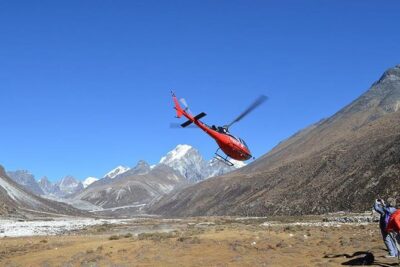
Everest Base Camp Helicopter Tour landing at Hotel Everest View
Read our review →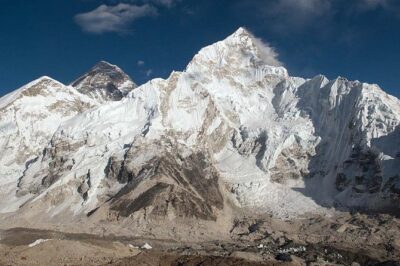
Everest Base Camp Trek with Helicopter Return from Gorakshep to Lukla
Read our review →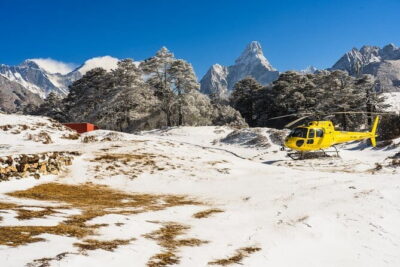
Everest Base Camp helicopter tour with landing
Read our review →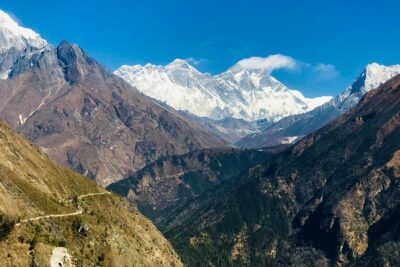
Everest Base Camp Helicopter Tour with Hotel Everest View Landing
Read our review →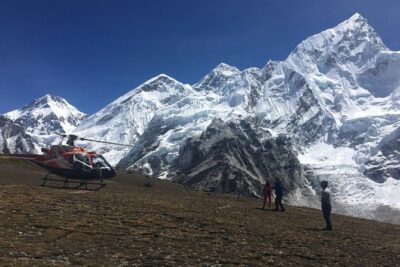
Guaranteed Landing at Everest Base Camp Kalapathar by Helicopter
Read our review →Everest Base Camp Helicopter Tour landing at Everest View Hotel.
Read our review →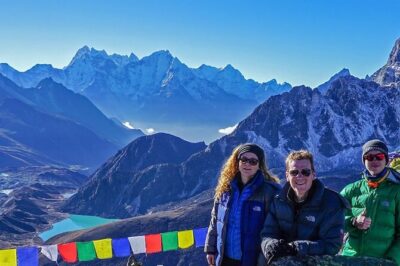
Everest Base Camp Trek with Helicopter Return to Lukla – 10 Days
Read our review →Browse the lists this tour appears in