
Review · NEW ZEALAND HELICOPTER TOURS
Kaikoura: 1-Hour Whale Watching Helicopter Tour
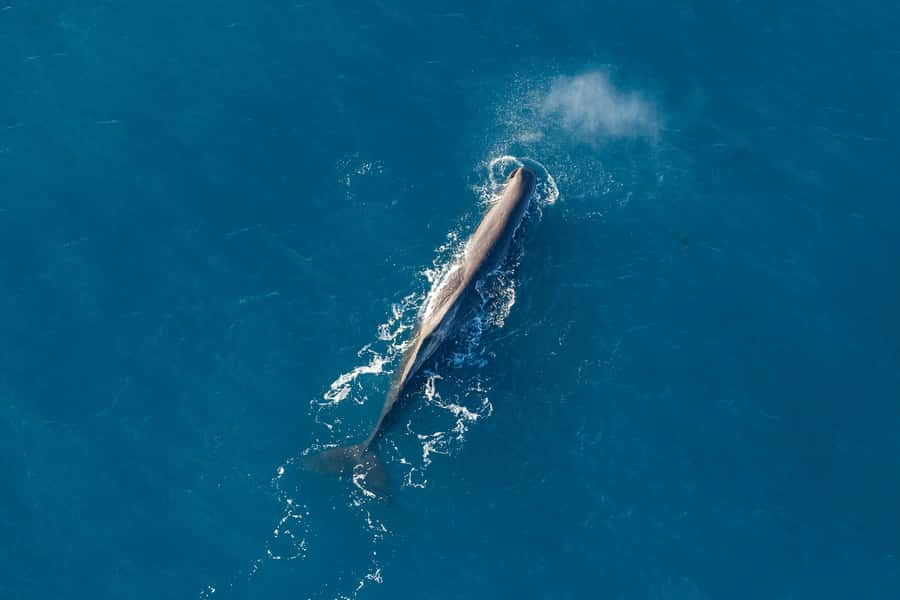
Kaikōura’s whale watching is especially striking from a helicopter because you can see a sperm whale from tip to tail, not just a back or fluke breaking the water. The flight also reaches the mountains, with a landing near the 1,600-metre summit of Mt Fyffe and broad views over the peninsula and Pacific.
I like the small group of six, the low-impact bird’s-eye view, and the chance to spot dolphins and fur seals along the coast. I also like the clear local commentary, with pilots such as Daniel and Peter explaining whale behavior, earthquake damage, and the Kaikōura Canyon. The catch is simple: part of the one-hour flight is used for the mountain landing, so dedicated whale watchers may wish the full hour stayed over the sea.
Key points
- Whales seen from above: The helicopter gives you a full view of sperm whales as they rest near the surface before heading down for long feeding periods.
- A 1,600-metre mountain landing: You get time on rugged alpine ground with views over Mt Fyffe, the peninsula, and the Pacific Ocean.
- Wildlife beyond whales: Keep watch for dusky dolphins and New Zealand fur seals around the Kaikōura Peninsula.
- Small aircraft group: The flight is limited to six participants, making it easier to hear the pilot and see from the cabin.
- Weather matters: The flight can be moved to another date or time if conditions are unsuitable.
- A costly but unusual outing: At $792 per person, this is best judged as a combined wildlife flight and alpine sightseeing trip, not a standard whale cruise.
Why the helicopter changes Kaikōura whale watching
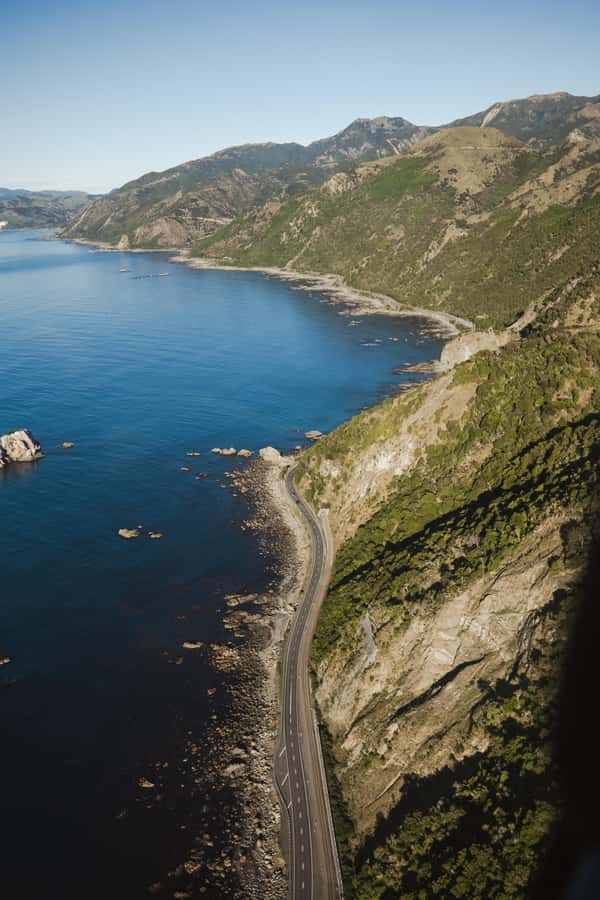
Kaikōura is one of the rare places where a whale trip can combine open-ocean wildlife with high mountain scenery in a single hour. The town sits between the Pacific and the Seaward Kaikōura Range, so the transition from sea to snow or bare alpine rock is remarkably quick.
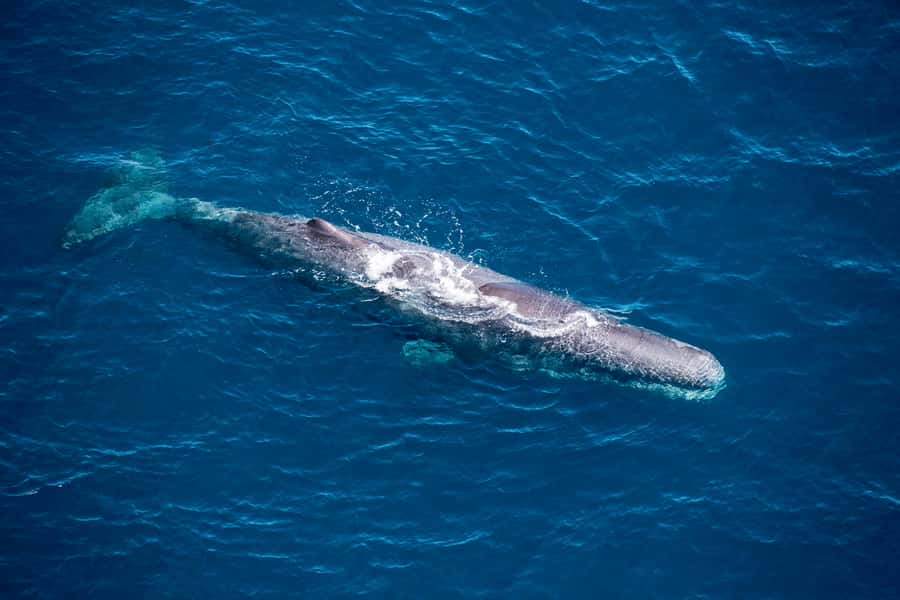
The helicopter’s height gives you a useful advantage. A sperm whale may look large from a boat, but from above you can see its whole body beneath or near the surface. You also get a better sense of its scale against the surrounding sea.
The flight is carried out above the Whale Sanctuary and Hikurangi Marine Reserve. The aerial approach lets the helicopter watch without approaching the animals in the same way a boat must. That does not guarantee a sighting, but it provides a less disruptive way to search for whales and can give you a clear view when one is found.
The whale population is present year-round, according to the preflight briefing. Still, marine wildlife is never a timed performance. You may see several sperm whales, as some passengers have, or spend more of the flight taking in the coast and mountains. That uncertainty is part of the price calculation.
More Whale Watching Trips in New Zealand:
- Kaikoura Helicopters Classic Whale Watch
★ 5.0 · 40 reviews - Kaikoura Helicopters Extended Whale Watch
★ 4.5 · 15 reviews - Kaikōura: 45-Minute Whale Watching Helicopter Tour
★ 5.0 · 8 reviews
The Kaikōura Airport briefing and takeoff
You meet at the Kaikōura Airport Terminal on State Highway 1 in Peketa. The experience begins with a safety briefing from the pilot, including information about the aircraft, safety features, and the local marine environment.
Expect a practical introduction rather than a long classroom session. The pilot explains the year-round sperm whale population and the unusual underwater structure of Kaikōura Canyon. This canyon helps explain why large marine animals come so close to the coast.
You receive a headset for the flight, so the pilot can provide commentary while the rotors are turning. An English-speaking pilot-guide handles the tour, and an English audio guide is also included in the activity details.
All participants must be weighed at check-in because helicopter weight limits affect the aircraft. That can feel more personal than a normal sightseeing tour, but it is a routine safety requirement and worth knowing before you arrive.
The aircraft carries a small group of up to six people. That number matters. You are not being placed in a large sightseeing cabin where commentary gets lost and window access becomes a scramble. Even so, every seat will not offer the same view at every moment, so keep your camera ready and listen for the pilot’s directions.
Searching for sperm whales above the marine reserve
Once airborne, the helicopter heads over the Whale Sanctuary and Hikurangi Marine Reserve. This is the main wildlife section of the flight, and the pilot searches the water for sperm whales from above.
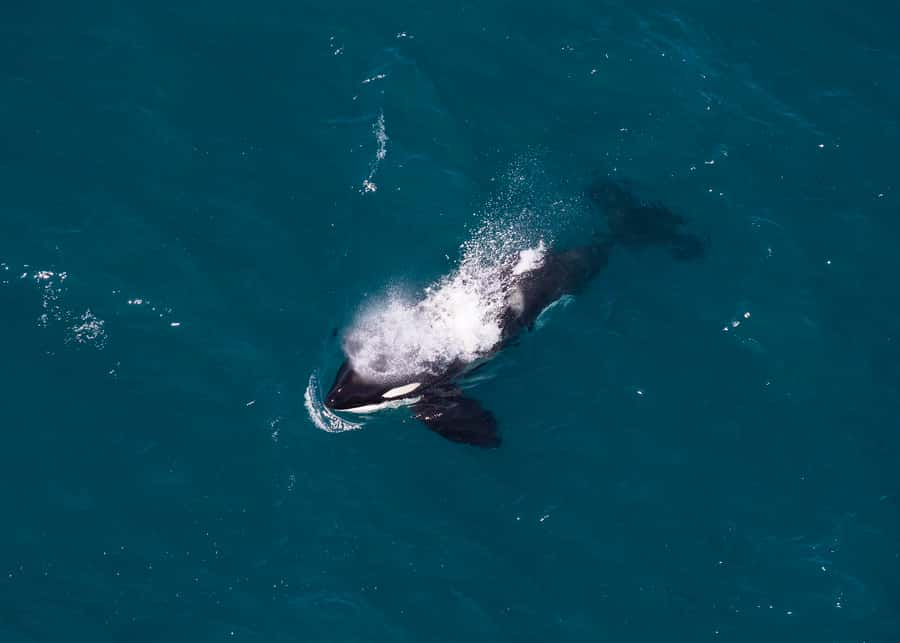
Sperm whales spend much of their time feeding below the surface. When one comes up, the aerial view helps you follow its position and see the animal as a complete form. The pilot may also be able to anticipate when a whale is about to head back down. One particularly memorable flight included a countdown to a whale’s final tail movement before it returned to deeper water.
The best whale sightings can last long enough for you to study the animal rather than simply point and shoot. Some flights have included several sperm whales, and one also encountered orcas feeding on a large swordfish. That sort of sighting is a bonus, not something you should count on.
Your pilot’s local knowledge adds real value here. Daniel, one of the pilots named in the available tour feedback, was praised for explaining whale habits and positioning the helicopter well for photographs. Peter was also singled out for explaining whale behavior and the surrounding area. Pilot assignments can change, so do not book expecting one particular person, but the guide’s role is more than simply flying the aircraft.
The helicopter is moving, the sea is moving, and the whale may disappear quickly. Bring a camera, but do not make photography your only goal. A wide shot can show the whale’s full body better than a long-lens close-up, and a fast shutter speed may help reduce blur. The flight information specifically recommends a camera, sunglasses, a hat, and water.
Dolphins, fur seals, and the Kaikōura Peninsula
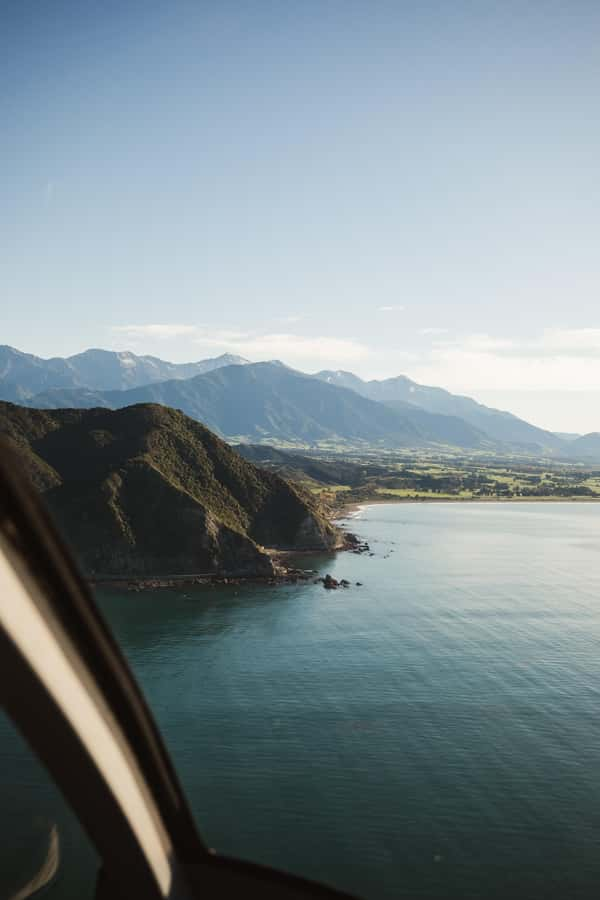
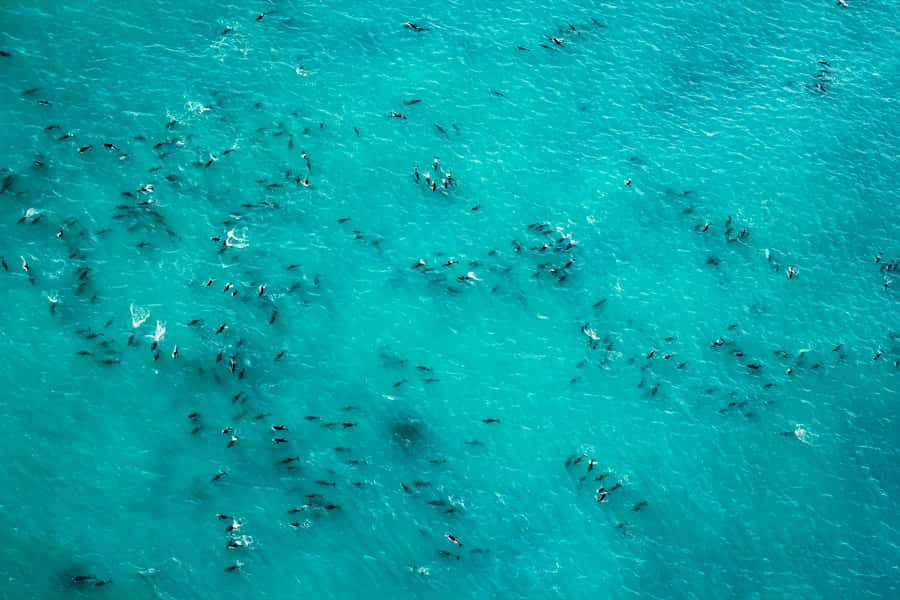
The route continues along the Kaikōura Peninsula, where you may spot dusky dolphins and New Zealand fur seals. Dolphins can be easier to recognize from the air when they travel in groups, while fur seals may appear as small dark shapes on rocks or near the water.
A past flight saw large pods of dusky dolphins moving alongside a swim-with-dolphins boat. That kind of comparison also shows how much territory the helicopter can cover in a short time. From the air, you can connect the wildlife with the shape of the peninsula and the wider Pacific.
Do not judge the tour only by the number of species checked off. The value of this section is the broad view. You see the coastal edge, the reserve, the peninsula, and the changing water around them. The pilot may also point out earthquake effects, landslides, the fault line, and a barrier lake. These details give the scenery some context rather than leaving you with a series of pretty but disconnected views.
There is one fair complaint about the itinerary. The tour is presented as a whale watching helicopter flight, but the final section is devoted to the mountains. One person felt that the full hour should have been spent looking for whales. If your top priority is maximum time over the marine reserve, a whale-focused boat or another aircraft product may fit better. Here, the helicopter flight is deliberately split between wildlife and alpine scenery.
More One-Hour Experiences in New Zealand:
- 1-Hour Helicopter Tour in Iceland: The Geothermal Tour
★ 4.9 · 263 reviews - Private 60 Minutes Helicopter Tour in Honolulu
★ 5.0 · 91 reviews - One hour Aerial Tour of Toronto and Niagara Falls with iflyTOTO
★ 4.0 · 57 reviews - 60 Minutes SHARED Helicopter Tour in Honolulu
★ 5.0 · 46 reviews
Landing near Mt Fyffe at 1,600 metres
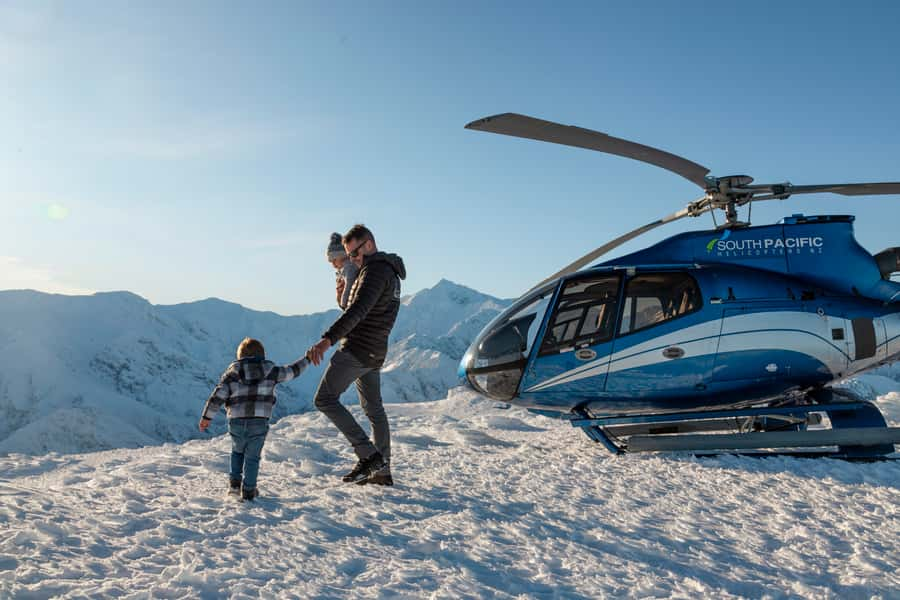
The final major stop is an alpine landing in the Seaward Kaikōura Range. The advertised high point is around 1,600 metres at Mt Fyffe, though the exact landing location depends on the flight plan and conditions.
You get out of the helicopter and walk around on rugged, open ground. The reward is a wide view back toward the Kaikōura Peninsula and across the Pacific. At certain times of year, the landing may be on snow, adding a sharp change from the coastal wildlife section.
This is not a long mountain hike. It is a short stop to stand among the peaks, take photographs, and appreciate the height and isolation before returning to the aircraft. Wear comfortable shoes and warm clothing even if Kaikōura feels mild at the airport. Alpine conditions can be cold, and the supplied advice also recommends a sun hat and sunglasses.
The landing has another practical benefit: it breaks up the flight. An hour in a helicopter can feel intense, especially if you are trying to watch the sea constantly. Stepping onto solid ground gives you a pause and creates a second kind of memory.
Still, the mountain landing is precisely the part that may not suit every customer. If you care more about whale behavior than mountain views, it can feel like time taken away from your main interest. If you see the tour as a two-part outing, the landing is a strong feature. If you see it as a pure whale search, it is a compromise.
What the $792 price really buys
At $792 per person, this is a major splurge. The price includes the one-hour helicopter flight, the mountain summit landing, pilot commentary, headsets, life jackets, and real-time flight tracking. Food and drinks are not included.
The cost makes more sense if you want two experiences in one: aerial marine wildlife viewing and a short alpine landing. A boat trip usually places you close to the water, while this flight gives you a much wider view and a different sense of the whales’ size. It also saves time if your schedule is tight.
The small group helps support the price. With a maximum of six people, the trip feels more personal than a large sightseeing operation. You are paying for the aircraft, pilot, fuel, safety systems, and a very limited number of seats, not only for the time spent looking at whales.
That said, you should be comfortable with uncertainty. Weather can force a change in the date or departure time, and wildlife cannot be guaranteed. The price is easier to justify if you would still be happy with a mountain flight, coastal views, and local interpretation even if the whale sightings are brief.
A full refund is available when you cancel at least 24 hours ahead, and you can reserve without paying immediately. Those terms help when weather is unsettled, though they do not remove the need to keep space in your itinerary for a possible schedule change.
Comfort, safety, and practical limits
The tour is suitable for children aged eight and older. It is not suitable for people with mobility impairments, and the activity information also excludes people prone to seasickness.
The helicopter is wheelchair accessible according to the activity details, but the separate mobility restriction is important. Ask the operator directly about your particular needs before booking rather than relying on a general accessibility label.
Bring warm layers, comfortable shoes, sunglasses, a hat, water, and a camera. You do not need to plan a meal around the trip because food and drinks are not provided, but you should eat and drink beforehand if that helps you feel comfortable.
Flights operate only in favorable weather. The requested time or date may change, so avoid placing this tour immediately before an important connection. The real-time flight tracking is included, which gives the operator a way to monitor the aircraft and helps add a practical safety layer.
All whale watching flights follow New Zealand Department of Conservation Marine Mammal Regulations. That matters because a good wildlife outing should give you a clear view without treating the animals as props.
Who will enjoy this flight most
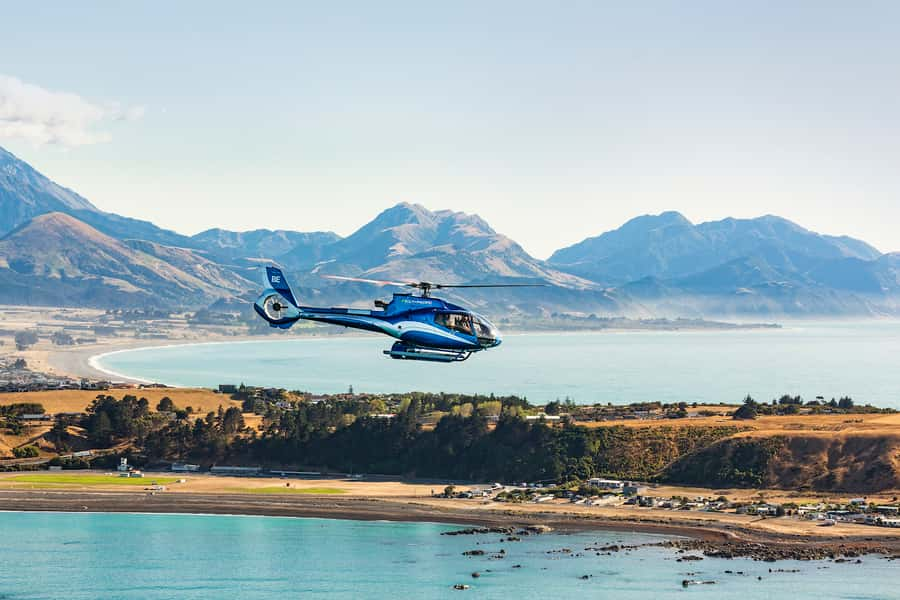
I would recommend this tour to you if you want a premium, compact look at Kaikōura from several angles. It suits photographers who value scale and variety, couples marking a special occasion, and anyone with limited time who wants whales, dolphins, coast, and mountains in one outing.
It is also a good match if you find boat trips uncomfortable or prefer to see marine animals without being on the water. Keep in mind that people prone to seasickness are listed as unsuitable, but a helicopter is still a moving aircraft and may not feel easy for everyone.
You should think twice if your sole aim is to spend every possible minute with whales. The mountain landing is a central part of the experience, not a minor add-on. You should also avoid booking if a tight schedule cannot absorb a weather-related change.
Should you book the Kaikōura helicopter tour?
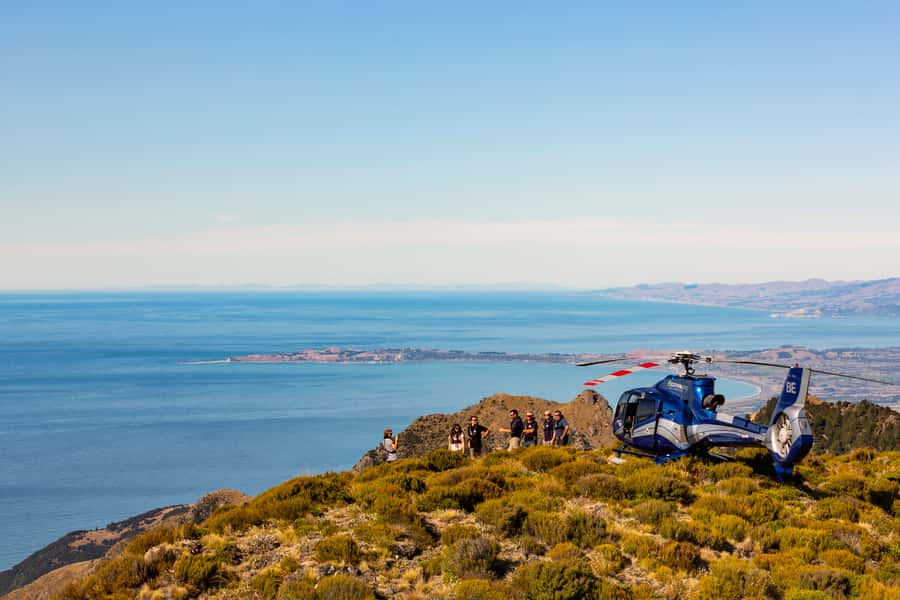
Book it if you value the complete picture: sperm whales viewed from above, dusky dolphins and fur seals along the peninsula, local stories about the canyon and earthquake damage, and a high mountain landing with possible snow.
Skip it if $792 feels too high for a one-hour activity or if you would resent giving part of the flight to the mountains. For the right person, the cost buys a rare combination of marine wildlife and alpine scenery, delivered in a small group with strong pilot commentary. Just make that choice knowingly, and treat the whales as a welcome encounter rather than a guaranteed schedule.
FAQ
Where does the helicopter tour begin and end?
The tour begins and ends at Kaikōura Airport Terminal, 617 State Highway 1, Peketa, Kaikōura.
How long does the experience last?
The helicopter tour lasts one hour, including the wildlife flight and mountain landing.
What wildlife might I see?
You may see sperm whales, dusky dolphins, and New Zealand fur seals. Other marine wildlife sightings are possible, but no sighting is guaranteed.
Where does the helicopter look for whales?
The flight travels over the Whale Sanctuary and Hikurangi Marine Reserve, where the pilot searches for sperm whales.
Does the tour include a mountain landing?
Yes. The helicopter makes a mountain summit landing in the Seaward Kaikōura Range, with views from around 1,600 metres at Mt Fyffe. Snow may be present at certain times of year.
How many people can join the flight?
The tour is a small-group experience limited to six participants.
What happens if the weather is poor?
Flights depend on favorable weather. The date or departure time may be changed if conditions are unsuitable.
What should I bring?
Bring comfortable shoes, warm clothing, sunglasses, a sun hat, a camera, and water. Food and drinks are not included.
Newly added flights around New Zealand
- Wellington: Scenic South Coast Discovery Helicopter Flight★ 4.8 · 4 reviews
- Wanaka: Scenic Helicopter Flight with Glacier Experience★ 5.0 · 42 reviews
- Wānaka: Scenic Helicopter Flight Wānaka Max★ 5.0 · 11 reviews
- Wānaka: Heli Siberia – Helicopter Flight, Hike & Jet Boat★ 4.6 · 4 reviews
- Wānaka: Heli Siberia Max – Helicopter Flight, Hike, Jet Boat★ 5.0 · 3 reviews
- Wānaka: Helicopter Scenic Flight Wānaka Experience★ 5.0 · 4 reviews
- Bay of Many Coves, Marlborough Sounds- Heli-lunch from Wellington★ 5.0 · 8 reviews
- Wharekauhau Heli-lunch from Wellington★ 4.5 · 6 reviews
New Zealand Helicopter Tours, compared.
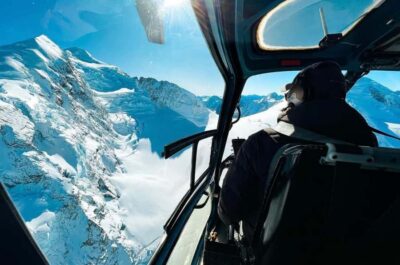
Franz Josef Glacier: Helicopter Flight & Alpine Landing
Read our review →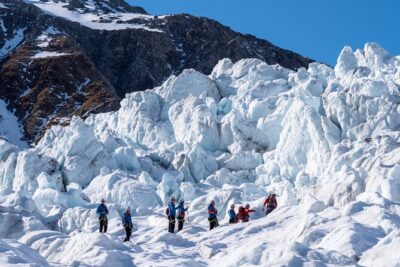
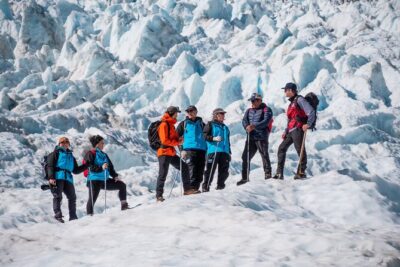
Franz Josef: 35min Helicopter Trip over Two Glaciers
Read our review →
Mount Cook: Scenic Helicopter Flight with Alpine Landing
Read our review →
Franz Josef & Fox Glaciers Helicopter Flight & Snow Landing
Read our review →
Franz Josef: 2.5 Hour Glacier Hike with Helicopter Transfer
Read our review →
Fox Glacier: Up to 3 Hours Hike with Helicopter Transfer
Read our review →Browse the lists this tour appears in