
Review · NEW ZEALAND HELICOPTER TOURS
Helicopter White Island / Mount Tarawera ‘Volcanic Extremes’
Whakaari White Island is the star of this Volcanic Extremes flight: an active marine volcano whose crater, lake, and steaming ground can change from day to day. Then you land on Mount Tarawera, the quiet but massive volcano that erupted in 1886. I like the sharp contrast between these two sites, and I like that you do not just circle Tarawera from above but touch down on its summit.
The main drawback is the price, $1,423.60 per person. Weather can also cancel the flight, and the short Mount Tarawera landing may feel too brief for anyone hoping for a long walk or a full mountain visit.
Key points at a glance
- Two very different volcanoes in one flight: See active Whakaari White Island from the air, then land on dormant Mount Tarawera.
- Aerial view of Whakaari’s crater lake: The offshore volcano is New Zealand’s only permanently active offshore volcano.
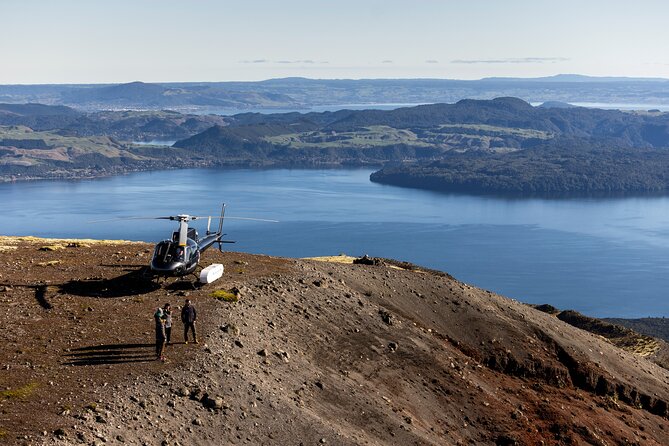
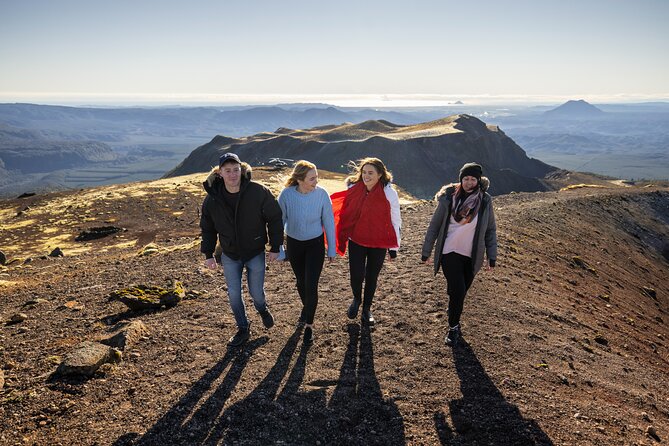
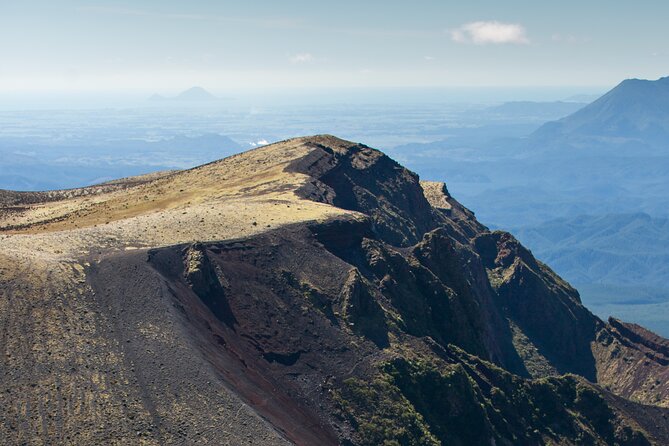
- Mount Tarawera landing: Look into the huge craters and domes formed by the 1886 eruption.
- About 1 hour 45 minutes total: The listed flight time is about 1 hour 25 minutes.
- Small group experience: The helicopter carries no more than 12 people.
- Plan around the weather: Poor conditions can lead to a new date or a full refund.
Two volcanoes, two very different moods
This is not simply a helicopter sightseeing trip with a volcano in the background. It gives you two distinct volcanic experiences in one outing.
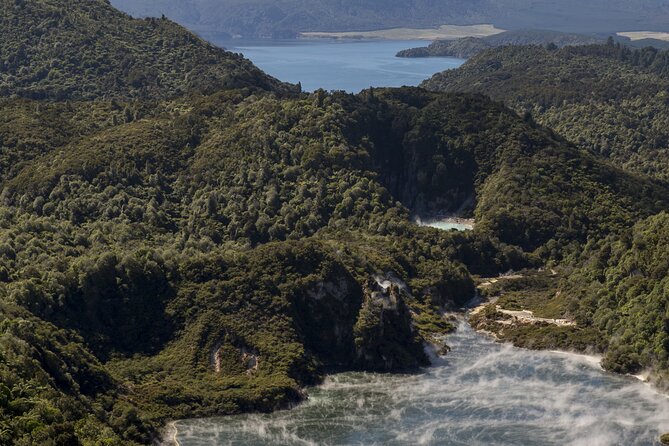
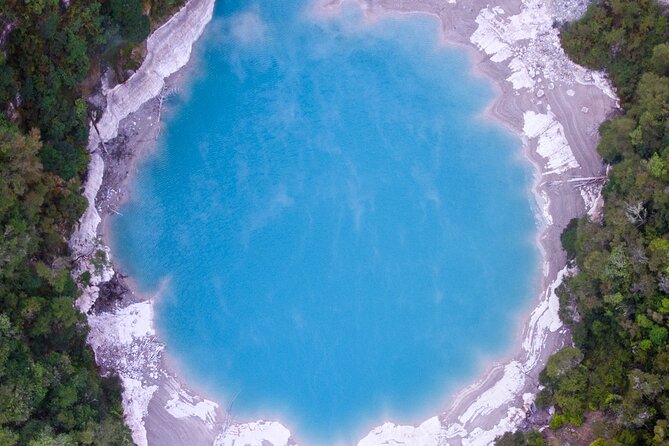
Whakaari White Island sits offshore in the Bay of Plenty. It is active, exposed, and constantly changing. From the helicopter, you can look into the crater lake and see the scars of volcanic activity from above. The important point is that you fly over the island rather than land there. That keeps the visit brief and aerial, but it also gives you a broad view of a place that is not open for ordinary sightseeing.
Mount Tarawera is different in every way. It lies inland, is now dormant, and rises above the central North Island. Its broad summit was torn apart in the 1886 eruption, leaving huge craters and unusual volcanic domes. Landing there gives you a closer look at the force of that event than a standard scenic flight can provide.
I like this pairing because the two sites explain different parts of New Zealand’s volcanic character. Whakaari shows a volcano that is still active. Tarawera shows what remains after a major eruption has reshaped a mountain.
More Volcano Helicopter Tours in New Zealand:
- Mt Tarawera Helicopter Tour with Volcano Landing
★ 5.0 · 40 reviews - Mount Tarawera Volcanic Adventure by Helicopter
★ 5.0 · 11 reviews - Auckland: 20min Helicopter scenic flight – City & Volcanoes
★ 4.9 · 8 reviews
Flying over Whakaari White Island
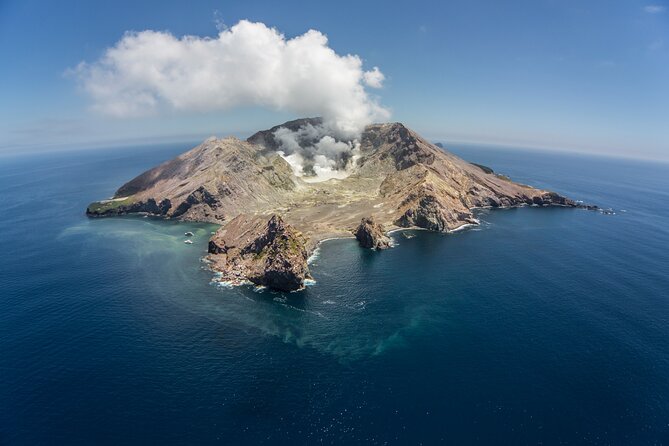
The first major part of the experience is the flight over Whakaari. From the air, you can take in the island’s crater, crater lake, and changing signs of volcanic activity without leaving the helicopter.
The aerial view matters here. A volcano is not only a cone or a smoking vent. Whakaari is an offshore volcanic system with an open crater and a setting surrounded by ocean. Seeing the whole island at once helps you understand its shape and scale.
The 2019 eruption also gives this part of the flight a serious edge. Whakaari is not presented as a harmless scenic stop. It is an active volcano, and its activity can change daily. The flight offers a way to see it while respecting the restrictions that apply to an active volcanic site.
Your pilot-guide provides commentary through a headset, so you can hear the explanation over the aircraft noise. That is useful on a flight like this, where a few clear facts can make the view far more meaningful. You are not left to guess which crater or feature you are looking at.
This section may be less satisfying if you want to walk on volcanic ground. There is no Whakaari landing included, and the aircraft view is your only perspective there. Still, for an active offshore volcano, the aerial visit is the practical part of the experience and arguably the safer one.
Landing on Mount Tarawera after the 1886 eruption
The second stop is Mount Tarawera, where the helicopter lands for about 10 minutes according to the listed schedule. That is a short visit, so you should think of it as a dramatic viewpoint rather than a mountain hike.
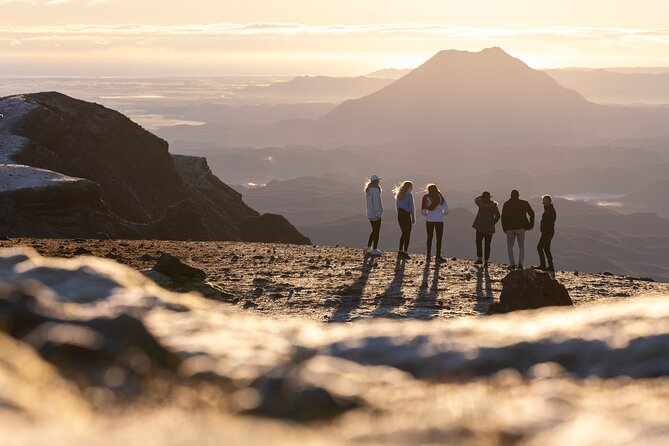
The 1886 eruption is central to the experience. It is regarded as the largest eruption in New Zealand’s living memory, and it split Mount Tarawera open. The summit area contains the physical evidence: deep craters, broken volcanic domes, and a jagged form that looks very different from a normal mountain peak.
The landing gives you time to look across the craters and take in the surrounding scenery from the mountain itself. From above, the eruption can seem like an abstract pattern. On the ground, even a short stop helps you grasp that the summit was violently changed.
I would not book this expecting a relaxed picnic or an extended walk. The listed stop is only 10 minutes, and food and drinks are not included. Use the time for photographs, the views, and the scale of the volcanic features. The helicopter then returns you to Rotorua and the original meeting point.
The short landing is also part of the appeal. You get the unusual experience of standing on Mount Tarawera without committing half a day to a longer land excursion. For a packed Rotorua itinerary, that can be a smart trade.
What the 1 hour 45 minute schedule means
The total experience lasts about 1 hour 45 minutes, with about 1 hour 25 minutes in flight. The remaining time covers the operating parts of the trip and the Mount Tarawera landing.
Exact timing can shift. Helicopter flights depend on weather, operating conditions, and the needs of the aircraft. The published schedule also gives a 1-hour first stop for Volcanic Air and a 10-minute Mount Tarawera stop, so you should treat the times as a useful guide rather than a promise of exact minutes in each place.
The flight length makes this easy to fit into a day in Rotorua. You do not need to give up a full day of sightseeing, yet the outing covers two major volcanic sites far beyond the reach of a normal city walk.
The tradeoff is that helicopter travel compresses the experience. You see a great deal in a short time, but you will not have long to study every feature. I see this as a good choice for someone who values access and perspective more than a slow, ground-level visit.
A few more flights around New Zealand worth comparing
- Franz Josef Glacier: Helicopter Flight & Alpine Landing
★ 4.8 · 619 reviews - Franz Josef Glacier Heli-Hike
★ 4.5 · 618 reviews - Heli Hike Fox Glacier
★ 5.0 · 563 reviews - Franz Josef: 35min Helicopter Trip over Two Glaciers
★ 4.8 · 451 reviews
The value of a $1,423.60 helicopter flight
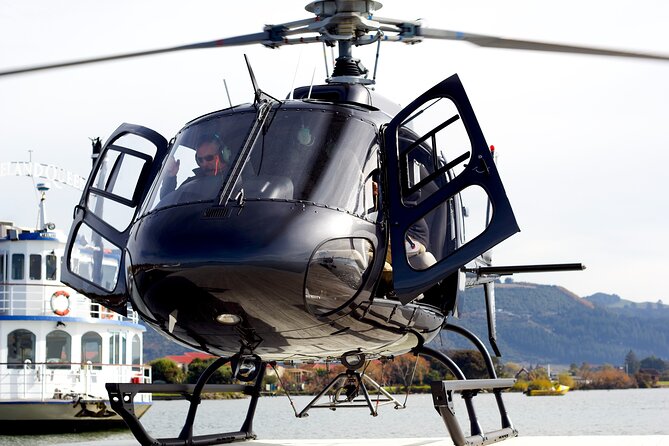
At $1,423.60 per person, this is a major purchase. You are paying for a small-group aircraft experience, access to a Mount Tarawera landing, and an aerial look at Whakaari White Island. That combination is difficult to reproduce with ordinary transport.
The cost makes more sense if both volcanoes matter to you. A standard Rotorua excursion may show geothermal features or provide a ground-level view of the region, but it will not combine an active offshore volcano with a landing on the site of the 1886 eruption.
The value is weaker if you mainly want a quick scenic flight. The price is high for views alone, especially since the Tarawera stop is short and Whakaari is an overflight rather than a landing. You should book this because of the two specific volcanic sites, not simply because helicopters are exciting.
The group limit of 12 helps. This is not described as a large sightseeing aircraft carrying a crowd. A smaller group generally makes the experience feel more focused, and the headset system lets you hear the pilot-guide’s explanation.
The operator has also shown flexibility when conditions and scheduling create problems. Staff worked hard to get an early flight arranged for one booking, and the experience includes a professional pilot-guide. I would still avoid building an unmovable chain of plans around this outing, since weather can interfere.
Weather, safety, and changing conditions
This experience requires good weather. If poor conditions cancel the flight, you can accept another date or receive a full refund. That policy is helpful, but it does not remove the practical inconvenience of losing a planned activity on a specific day.
I would schedule the flight early in your Rotorua stay if possible. That leaves room to move it if the weather turns bad. The operator requires at least two adult fares for the tour to run, so the minimum operating requirement is another reason not to leave this until the last possible moment.
Whakaari’s activity can change daily. That fact is part of the experience, but it also means the exact appearance of the volcano is not fixed. You may see different volcanic features from one flight to another. Do not expect a perfectly predictable display.
The helicopter has a maximum per-seat weight limit of 297 pounds, or 135 kilograms, for comfort and balance. The information also gives a total passenger weight limit of 298 pounds, so if your weight is close to the limit, check directly with Volcanic Air before booking. Most people can participate, and the meeting point is near public transport.
Starting at Rotorua’s lakefront
The meeting point is 1 Lakefront Drive, at the Rotorua city lakefront. There is no hotel pickup or drop-off, so you need to make your own way there.
That location is convenient if you are already staying near central Rotorua or using public transport. It also keeps the start simple: meet at the lakefront, receive the flight briefing and equipment, then return to the same point at the end.
Headsets are provided so you can hear the guide clearly. That small detail matters more than it may seem. Helicopter noise can easily swallow ordinary conversation, and the headset lets you follow the commentary while watching the volcanoes.
Bring your attention, not a large meal plan. Food and drinks are not included, and the experience is short enough that you can eat before or after. The main thing to prepare for is a quick change from city meeting point to volcanic viewpoints far beyond Rotorua.
Who will get the most from this experience
I would recommend Volcanic Extremes to you if you want to see major volcanic sites but have limited time for longer ground excursions. It suits photographers, geology enthusiasts, and anyone who wants a strong sense of Rotorua’s volcanic setting from above.
It is also a good fit if you want a rare combination: an active offshore volcano and a dormant volcano with a dramatic eruption site. Few short outings can offer those two contrasts in one booking.
You may want to choose something else if you dislike flying, need a low-cost activity, or want a long walk on Mount Tarawera. The brief landing is memorable, but it is not an extended summit outing.
The experience is also not ideal for a tightly packed schedule that cannot handle changes. Weather is part of the decision, and an active volcano never offers a perfectly fixed viewing plan.
Booking details worth checking first
Confirmation is sent within 48 hours of booking, subject to availability. At least two adult fares are required for the experience to operate, and the maximum group size is 12.
Free cancellation is available up to 24 hours before the start time for a full refund. Cancellations or changes inside that 24-hour window are not accepted for a refund. The cut-off uses local time.
If the operator cancels because of poor weather or because the minimum number is not reached, you can choose a different date or experience, or receive a full refund. I would read that policy alongside your own schedule before paying the high fare.
Should you book Volcanic Extremes?
Book it if you want the strongest possible volcanic overview in a short Rotorua outing and can accept the cost. The pairing is the real prize: Whakaari gives you an active crater seen from the air, while Mount Tarawera lets you stand beside the remains of a much older eruption.
Skip it if the price feels uncomfortable or if a 10-minute landing seems too short. You can find less expensive Rotorua activities, but they will not give you this particular combination of access, scale, and volcanic contrast.
My practical advice is to schedule it early in your stay, keep your plans flexible, and confirm the weight limits if they apply to you. If the weather cooperates, this can become the centerpiece of a Rotorua visit rather than just another scenic flight.
FAQ
How long does the Volcanic Extremes experience last?
The experience lasts approximately 1 hour 45 minutes. About 1 hour 25 minutes of that time is listed as flight time.
Where does the tour begin?
It begins at 1 Lakefront Drive, City Lakefront, Rotorua 3010, New Zealand.
Where does the experience finish?
The activity ends back at the meeting point in Rotorua.
Does the helicopter land on Whakaari White Island?
No. The experience includes a flight over Whakaari White Island, including aerial views of its crater lake and volcanic activity.
Does the helicopter land on Mount Tarawera?
Yes. The itinerary includes a Mount Tarawera landing, with about 10 minutes listed for the stop.
What is included in the price?
Headsets and a professional pilot-guide are included.
Is hotel transportation included?
No. Hotel pickup and drop-off are not included. You need to reach the Rotorua lakefront meeting point yourself.
What happens if bad weather cancels the flight?
You can choose another date or receive a full refund if the experience is canceled because of poor weather.
Newly added flights around New Zealand
- Wellington: Scenic South Coast Discovery Helicopter Flight★ 4.8 · 4 reviews
- Wanaka: Scenic Helicopter Flight with Glacier Experience★ 5.0 · 42 reviews
- Wānaka: Scenic Helicopter Flight Wānaka Max★ 5.0 · 11 reviews
- Wānaka: Heli Siberia – Helicopter Flight, Hike & Jet Boat★ 4.6 · 4 reviews
- Wānaka: Heli Siberia Max – Helicopter Flight, Hike, Jet Boat★ 5.0 · 3 reviews
- Wānaka: Helicopter Scenic Flight Wānaka Experience★ 5.0 · 4 reviews
- Bay of Many Coves, Marlborough Sounds- Heli-lunch from Wellington★ 5.0 · 8 reviews
- 15-Minute Wellington Harbour Helicopter Flight★ 4.0 · 9 reviews
New Zealand Helicopter Tours, compared.
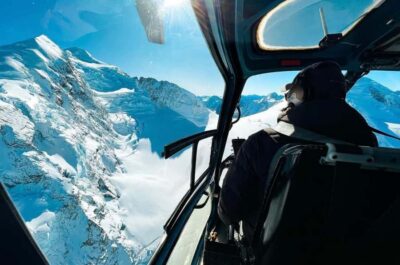
Franz Josef Glacier: Helicopter Flight & Alpine Landing
Read our review →
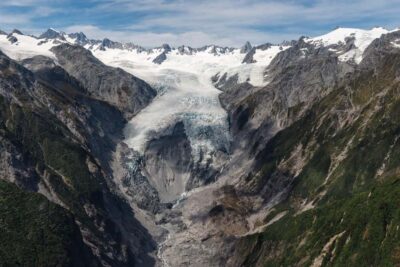
Franz Josef: 35min Helicopter Trip over Two Glaciers
Read our review →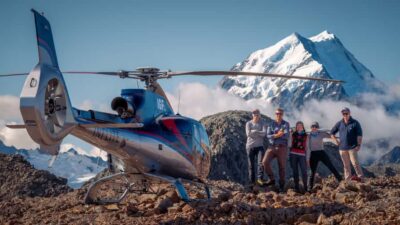
Mount Cook: Scenic Helicopter Flight with Alpine Landing
Read our review →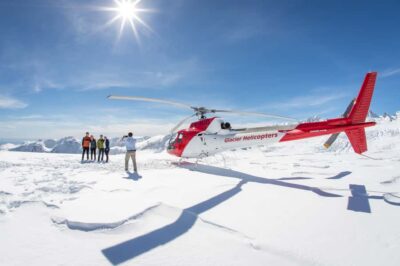
Franz Josef & Fox Glaciers Helicopter Flight & Snow Landing
Read our review →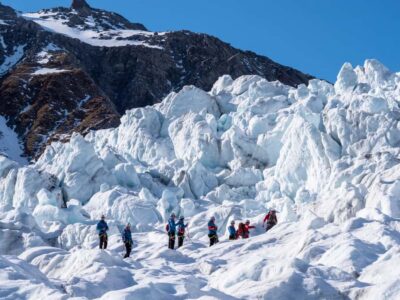
Franz Josef: 2.5 Hour Glacier Hike with Helicopter Transfer
Read our review →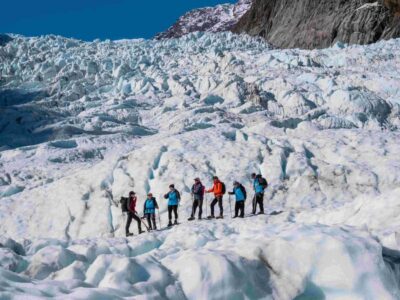
Fox Glacier: Up to 3 Hours Hike with Helicopter Transfer
Read our review →Browse the lists this tour appears in