
Review · REYKJAVIK HELICOPTER TOURS
Iceland Volcanic Eruption Area Helicopter Tour from Reykjavík
The big draw here is simple: you get an aerial view of Iceland’s recent volcanic activity, then sweep back toward Reykjavík and Faxaflói Bay. On a good day, the pilot may circle an active fissure several times so everyone gets a clear look. If conditions allow a landing, walking on warm, sulfur-venting lava can turn a short flight into a remarkable afternoon.
I especially like the small group size, with a maximum of five people, and the chance to see both raw volcanic ground and Reykjavík in one outing. Pilots such as Laura, Oliver, Robert, and Aleksander have been praised for smooth flying and useful explanations. The main drawback is that the trip is short, costly at $592.82 per person, and completely dependent on weather and current volcanic conditions.
Key things to know before you book
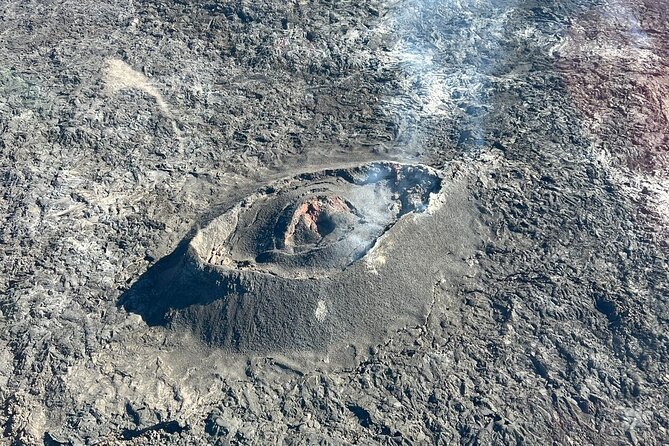
- Fresh lava fields near Reykjavík: The Reykjanes Peninsula is about 30 kilometers from the capital and has seen several eruptions since 2021.
- A maximum of five people: The small helicopter group gives you a better chance at an unobstructed view than a large sightseeing flight.
- Active lava is never guaranteed: You may see glowing lava, smoke, craters, or old lava flows instead.
- Possible lava-field landing: Some flights land near a crater or recent eruption site, but this depends on weather, safety, and the day’s route.
- A 35 to 45 minute flight: The experience packs volcanic sites and Reykjavík views into a compact outing.
- Weather can change the plan: Poor conditions may lead to a postponement or a full refund, so keep some flexibility in your schedule.
Why this helicopter flight is different
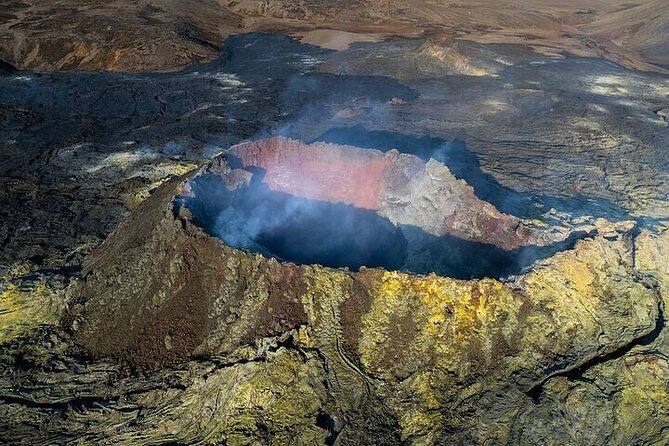
Iceland gives you plenty of ways to see volcanoes from the ground. A helicopter changes the scale. From above, craters, lava channels, lakes, coast, and roads fit together in a way that is hard to grasp from a trail or viewing platform.
The Reykjanes Peninsula is especially suited to this kind of flight. It sits close to Reykjavík, yet it feels stark and unsettled. The area has experienced more than 50,000 earthquakes in recent years and several eruptions since 2021. That activity has reshaped the ground with fresh lava, new fissures, steaming areas, and dark volcanic ridges.
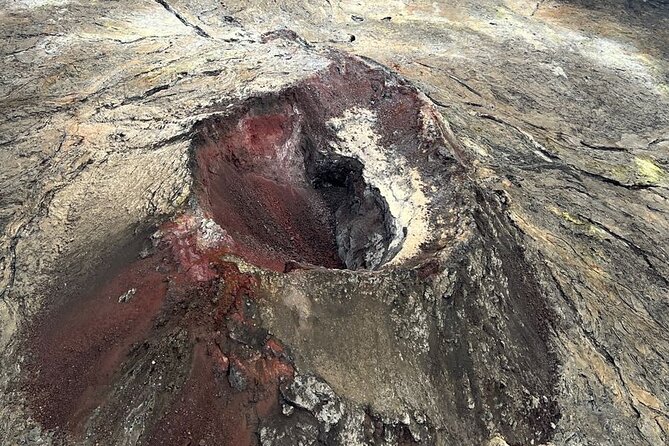
You are not simply looking at an old volcanic cone from a distance. You may see ground formed very recently. If an eruption is active, the red glow and bursts of lava provide the main spectacle. If activity has stopped, the trip can still show smoking craters, black lava fields, and the marks left by earlier eruptions.
The experience is best understood as a chance to see Iceland in a changing moment, not as a guaranteed lava show. Volcanic activity may stop days before your flight. That happened to some passengers who still found the craters and fresh flows worth seeing. Your expectations matter here. Book it for the geology and the views first, with active lava as a thrilling bonus.
More Volcano Helicopter Tours in Reykjavik:
- From Reykjavik: New Volcanic Area Helicopter Tour
★ 4.8 · 500 reviews - Helicopter Tour Over Iceland’s Reykjanes Volcano Eruption Site
★ 5.0 · 68 reviews - Reykjavik: 45-Minute Volcano Sightseeing Helicopter Tour
★ 4.6 · 45 reviews
From Reykjavík to the Reykjanes Peninsula
The flight begins at Glacier HeliACE FBO Reykjavík on Nauthólsvegur 101. The meeting point is in Reykjavík and is near public transportation, but hotel pickup and drop-off are not included. You will need to make your own way there and return to your accommodation afterward.
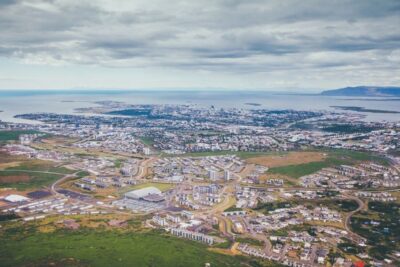
Once airborne, the city itself becomes part of the tour. Reykjavík’s colorful rooftops, coastline, and position beside Faxaflói Bay make a strong opening or closing view. From the helicopter, the capital looks compact, with urban streets meeting open Icelandic terrain and the icy blue water beyond.
Then the route heads toward Reykjanes. The peninsula is roughly 30 kilometers from Reykjavík, so you can move from city views to volcanic ground in a short time. That contrast is one of the tour’s best features. You do not spend the whole flight looking at one crater. You get a quick portrait of the capital, the bay, and a region shaped by active tectonic forces.
The listed volcanic portion is about 20 minutes, within a total experience lasting around 35 to 45 minutes. That is enough time for a useful overview, but not enough for a long hike or a broad tour of the entire peninsula. If you want a slow day outdoors, choose a ground excursion instead. If you want a compact, high-impact view, the timing works well.
What you may see over the eruption area
The volcanic portion can vary sharply from one date to another. During an active eruption, the pilot may circle the site several times. That matters because helicopter seating can affect your view, and repeated passes give everyone a fair chance to see the fissure or lava flow.
Some flights have passed over red lava fields and lava shooting from an active opening. Others have seen a volcano after its activity ended, with smoking craters and solidified flows still showing where the heat had been. The pilot’s route can also include older eruption sites from the last several years.
Look for changes in color and texture. Fresh lava can appear black, brown, or red depending on its age and heat. Craters may look deceptively small from the ground but reveal their full form from above. Lakes, fissures, and broad fields of cooled rock help you understand how the peninsula has been built and rebuilt.
The pilot commentary adds real value. Explanations may cover the dates of different eruptions, types of eruption, likely time frames, and features visible below. Pilots including Aleksander, Laura, Oliver, and Robert have been singled out for clear and engaging explanations, though your pilot will depend on the day.
Do not expect a standard sightseeing script delivered at a fixed landmark. Volcanic conditions change, and the exact route may shift. That uncertainty is part of the point, but it also means the flight you take may not match photographs used to promote it.
The possible lava-field landing
A landing near a lava field can be the moment that justifies the price. Several flights have landed near a crater or at the site of the 2021 eruption, allowing passengers to walk briefly on the cooled lava. Some ground remained warm, with sulfuric gas venting from parts of the solidified flow.
This is not a guaranteed part of every departure. Weather, wind, safety conditions, and the current state of the volcanic area determine what the pilot can do. The supplied tour details describe the flight over the volcanic zone, while individual flights have included landings when conditions permitted. Treat the landing as a welcome possibility, not a promise.
If you do land, listen closely to the pilot and stay within the allowed area. The excitement of walking on recently formed lava can make it easy to focus on photographs instead of footing and fumes. The experience is brief, but it gives you a physical connection to what you have just seen from the air.
A landing can also help with seating fairness. On some flights, passengers have been able to change positions after landing so each person could enjoy the views. That said, you should not assume every passenger will get a front seat. Seating is subject to the helicopter and pilot’s arrangements, and the total passenger weight limit is 243 pounds per person.
A few more flights around Reykjavik worth comparing
- 1-Hour Helicopter Tour in Iceland: The Geothermal Tour
★ 4.9 · 263 reviews - Helicopter Tour with Mountain Summit Landing from Reykjavik
★ 5.0 · 243 reviews - Helicopter Flight Over Geothermal Landscapes from Reykjavik
★ 5.0 · 154 reviews - From Reykjavik: Fire And Ice Helicopter Tour with 2 Landings
★ 4.8 · 103 reviews
Why the small group matters
The tour has a maximum of five people. The aircraft is described as having only five or six seats, so the flight feels more personal than a large sightseeing operation. You are close enough to hear the pilot’s explanations and ask about what you are seeing.
Small capacity also improves the odds of a clear window view, but it does not guarantee a particular seat. One passenger complained that another person tried to claim the front position, while the pilot ultimately decided the seating. The sensible approach is to let the crew organize it and accept that the aircraft’s layout determines some of your view.
The intimate size is particularly useful for photographers. You can frame the fissures, lava fields, craters, and coastline without a busload of people around you. Bring your camera or phone fully charged, but keep your attention on the changing view rather than taking pictures nonstop. The flight is short.
The small aircraft may also make the experience feel more intense if you are nervous about heights. One first-time helicopter passenger worried about flying but found the pilot calm and professional. If you are uneasy, tell the crew before departure. A smooth flight and clear explanations can help, but no helicopter ride can remove the feeling of being airborne.
The pilot makes or breaks the hour
The strongest part of this experience is often the pilot. A good pilot does more than operate the helicopter. The best ones point out eruption dates, explain how different eruptions formed, identify old craters, and keep the flight smooth while giving each person a good view.
Laura has been praised for both her flying and her ability to explain the sites below. Oliver was noted for his clear information during a landing at the 2021 eruption area. Robert provided a birthday passenger with a crater landing and plenty of explanation. Aleksander, described as a Norwegian pilot, kept passengers informed about eruption types and timing.
Those names do not guarantee who will fly your departure. They do show the kind of service to look for: calm handling, clear communication, and attention to all five people in the cabin. A pilot who circles an active site more than once is especially helpful because no one wants to pay this price and see the volcano for only a few seconds.
Price, timing, and real value
At $592.82 per person, this is not a casual add-on. For two people, the cost passes $1,180 before any extra spending. You are paying for a small helicopter flight, fuel, the pilot’s time, and access to a view that is difficult to reproduce from the ground.
The price makes more sense if you value three things: a small group, a flight over a current volcanic area, and the chance of landing on recent lava. It is harder to justify if you mainly want a quick look at Reykjavík from above, since the city portion is only part of the route and the overall flight lasts less than an hour.
I would schedule this early in your Iceland trip. Weather can force a cancellation, and volcanic activity may change before your departure. Leaving a day or two of flexibility gives the operator a chance to move you to a better slot. Some flights were canceled or rescheduled because of wind and poor visibility, with full refunds offered when a new time could not be arranged.
Multiple departure times are useful, especially if you are fitting the flight around a Reykjavík day. Still, keep your schedule loose. One passenger described repeated calls to change a confirmed time, while other passengers praised the operator for staying in touch during weather delays. Communication can be helpful, but it may also feel disorganized if your plans are tight.
You can cancel for a full refund up to 24 hours before the scheduled start time. Changes or cancellations inside that window are not refundable. If the operator cancels for poor weather or because the minimum number of people is not reached, you can choose another date, another experience, or a full refund.
Who should book this flight
This suits photographers, geology fans, first-time helicopter passengers, and anyone who wants to see Iceland’s recent volcanic activity without spending a full day on foot. Teenagers have also enjoyed it, and the short duration makes it easier to fit into a family itinerary.
It is a strong choice for a special birthday or final-day treat. One practical note: placing it on your last day can be risky if bad weather leaves no time to reschedule. The flight may be a wonderful finale, but early in the trip is safer if you want a second chance.
I would hesitate if your budget is tight, you need an exact departure time, or active lava is the only reason you are going. The volcano may be quiet, the weather may cancel the flight, and the main volcanic segment is brief. You need to appreciate old lava, craters, smoke, and broad views as much as glowing rock.
Practical details before takeoff
The experience is offered in English, and confirmation is provided when you book. Food and drinks are not included, and the activity returns to the same Reykjavík meeting point.
Most people can participate, but the stated total weight limit is 243 pounds per passenger. Check this before booking if it may apply to you. The operator lists the activity as suitable for most people, yet a helicopter cabin is a confined setting, so discuss any concern with the provider in advance.
For photographs, a clear phone or camera and spare battery are more useful than bulky equipment. You will have limited time, and the helicopter’s movement means quick shooting is often best. Listen for the pilot’s explanations, since the dates and type of each eruption give meaning to what might otherwise look like a field of dark rock.
Should you book the GlacierHeli volcanic flight?
Book it if you want a close, compact look at Iceland’s changing geology and can afford a premium experience with no guarantee of active lava. The combination of Reykjavík, Faxaflói Bay, fresh eruption sites, and a possible lava-field landing is unusual.
Skip it if you need a fixed schedule or a guaranteed eruption. The best value comes when you regard the flight as a chance to see a living volcanic region, not as a promise of red lava on demand. Schedule it early, leave room for bad weather, and let the pilot’s route determine the day’s story.
FAQ
Where does the helicopter tour begin?
The tour begins at Glacier HeliACE FBO Reykjavik, Nauthólsvegur 101, 105 Reykjavík, Iceland.
Where does the tour end?
The activity ends back at the same meeting point in Reykjavík.
How long does the helicopter experience last?
The flight lasts approximately 35 to 45 minutes. The volcanic area portion is listed as about 20 minutes.
How many people can join the tour?
The activity has a maximum of five travelers, and the helicopter is described as having five to six seats.
Is active lava guaranteed?
No. Volcanic eruptions are natural and may not be active on the day of your flight. You may instead see smoking craters, old eruption sites, and solidified lava fields.
Can the helicopter land on the lava field?
Some flights have landed near a crater or recent lava field when conditions allowed. A landing is not guaranteed and depends on weather, safety, and the current volcanic situation.
What happens if bad weather cancels the flight?
You will be offered a different date or a full refund if the operator cancels because of poor weather. You may also cancel for a full refund up to 24 hours before the experience starts.
Newly added flights around Reykjavik
- Reykjavik Helicopter Private Tour of Volcanoes★ 5.0 · 37 reviews
- Helicopter Tour: Reykjavik City with landing at Mount Esja★ 5.0 · 9 reviews
- Helicopter tour from Reykjavik: Hengill Area with at site landing★ 5.0 · 15 reviews
- Landmarks from Above: Helicopter tour with 3 Landings★ 5.0 · 2 reviews
- Private Helicopter Tour in Hengill Geothermal Area with Landing★ 5.0 · 2 reviews
- ATV & Helicopter Adventure Tour from Reykjavik★ 5.0 · 24 reviews
- Reykjavik: 45-Minute Volcano Sightseeing Helicopter Tour★ 4.6 · 45 reviews
- Landmannalaugar: Helicopter tour with 3 Landings★ 5.0 · 3 reviews
Reykjavik Helicopter Tours, compared.
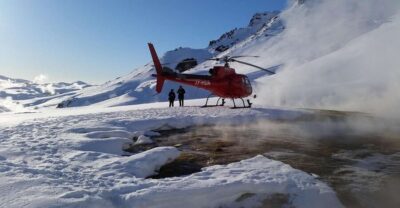
1-Hour Helicopter Tour in Iceland: The Geothermal Tour
Read our review →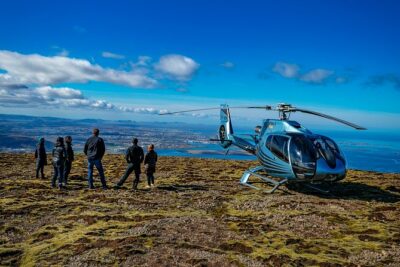
Helicopter Tour with Mountain Summit Landing from Reykjavik
Read our review →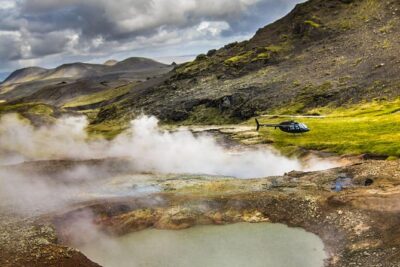
Helicopter Flight Over Geothermal Landscapes from Reykjavik
Read our review →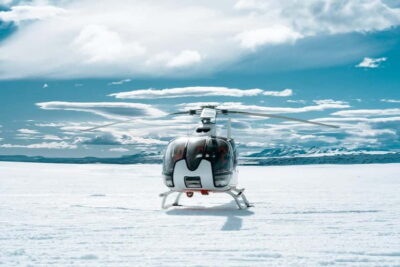
Panoramic Helicopter Flight with Summit Landing
Read our review →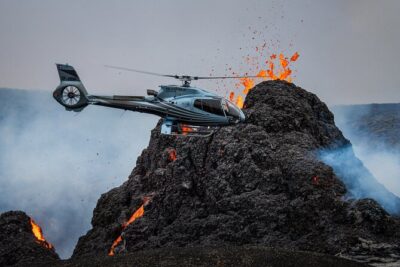
Helicopter Tour Over Iceland’s Reykjanes Volcano Eruption Site
Read our review →
Fire and Ice Helicopter Tour: Glacier and Hengill Geothermal Area
Read our review →Browse the lists this tour appears in